
Introduction
Introduction: For equipment dealers and leasing companies in Southeast Asia, choosing equipment that can adapt to changing working conditions, ensure high uptime, and quickly recoup investment is crucial. Among various lifting equipment, straight boom truck-mounted cranes are highly favored in markets such as Thailand, Vietnam, Indonesia, and the Philippines due to their simple structure, long operating radius, and cost-effectiveness. This article will delve into the application scenarios of straight boom truck-mounted cranes and analyze their core selling points in conjunction with localized needs in Southeast Asia to help you make more informed investment decisions.
Ⅰ. What is a Straight Boom Truck-Mounted Crane?
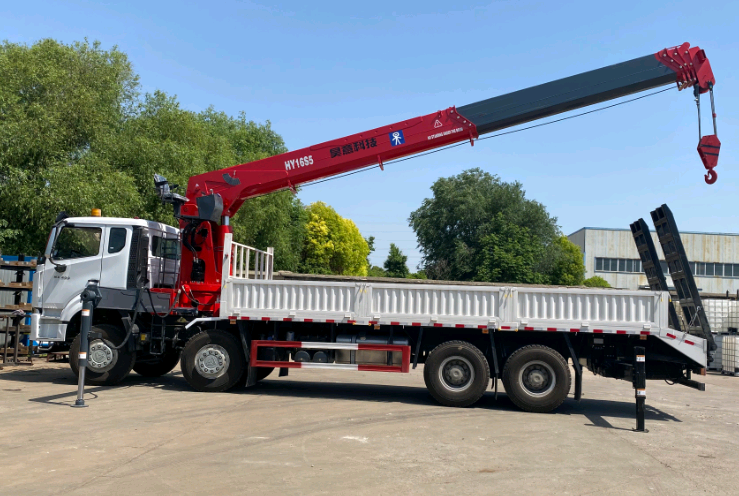
From an engineering perspective, a straight boom truck-mounted crane is a highly efficient piece of equipment that mounts a crane on a general-purpose vehicle chassis. Its core consists of several parts:
- Telescopic Boom: Like an extendable arm, it extends segment by segment via hydraulic cylinders to achieve long-distance high-altitude operations.
- Winch Mechanism: Responsible for vertically lifting and lowering goods via wire rope, it is key to achieving precise lifting.
- Slewing Mechanism: Drives the boom to rotate 360 degrees, expanding the working range.
Outriggers: Extend during operation to provide stable support and ensure safety.
Hydraulic and Control Systems: The “heart” and “brain” of the entire equipment, driving all movements.
The load curve, crucial for the rental business, is simply a “safety chart” that clearly shows you the weight of goods the equipment can safely lift at different boom lengths and operating radii. Understanding it is a prerequisite for ensuring safety and efficiency.
Ⅱ. Six Most Common Application Scenarios in Southeast Asia’s B2B Market
Straight boom truck-mounted cranes, with their excellent versatility, have become the preferred choice for truck-mounted cranes in various engineering projects. The following are its most typical application scenarios in the Southeast Asian market:
2.1 Construction Material Lifting and Transfer
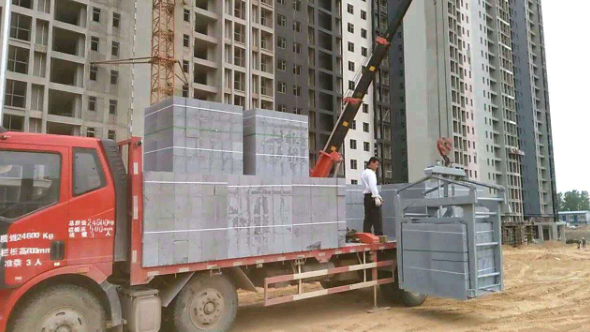
Customer Task: Unloading materials such as steel bars, bricks, and small prefabricated components from transport vehicles and lifting them to designated floors or locations on construction sites in cities or towns.
Site Limitations/Pain Points: Construction site space is usually narrow, making it impossible or too costly for large tower cranes or truck cranes to enter. Materials need frequent, rapid, short-distance transfers.
Why Straight Booms Are More Suitable: Straight boom truck cranes have a significant advantage in boom length, easily traversing obstacles and directly transporting materials to the work site. Their fast boom extension speed and intuitive operation make them ideal for repetitive vertical lifting and long-distance delivery tasks.
Benefits: Significantly improves material handling efficiency, reduces labor costs and intensity. One truck can handle both transportation and lifting, reducing reliance on other large equipment, accelerating project progress, and thus speeding up the rental company’s payback period.
2.2 Municipal Infrastructure Maintenance (Streetlights, Billboard Installation)
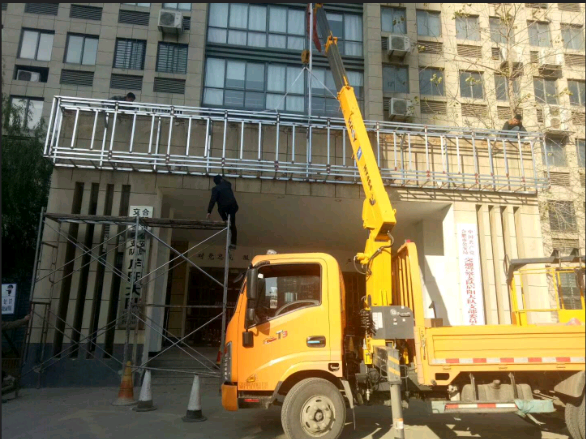
Client Task: Installing or replacing streetlights, traffic signs, and large billboards along city roads.
Site Limitations/Pain Points: Operations are typically conducted on narrow urban roads, requiring minimal impact on traffic. Work sites are dispersed, demanding high equipment mobility and rapid relocation.
Why Straight Booms Are More Suitable: Straight booms have a simple structure, allowing for direct and rapid adjustment of lifting height and amplitude. They are particularly suitable for scenarios requiring precise placement of objects at height. The integrated design of the vehicle allows for flexible relocation, enabling rapid deployment of outriggers upon arrival at the site.
Benefits: Highly efficient completion of municipal projects, improving the response speed of public services. For leasing companies, these projects are characterized by short durations and high frequency, providing a stable source of business to ensure high equipment uptime.
2.3 Power Facility Emergency Repair and Maintenance
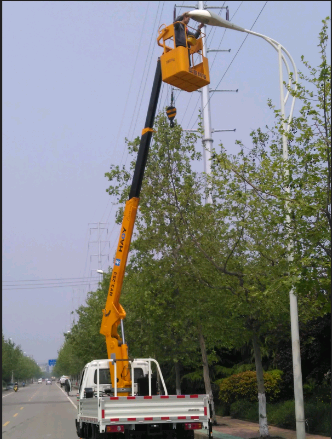
Customer Tasks: Quickly and safely transport maintenance personnel and tools to high utility poles to complete tasks such as inspection, insulator replacement, tree trimming, and equipment installation.
Site Limitations/Pain Points: Scattered locations and complex road conditions necessitate frequent relocation; dedicated boom cranes are costly and have limited uses; manual pole climbing is inefficient and risky, often requiring crossing ditches/green belts and other obstacles.
Why a Straight Boom Crane is More Suitable: A straight boom truck-mounted crane with a basket can be used for multiple purposes, leveraging its long boom and working radius to overcome obstacles and deliver equipment stably and accurately; when not in use, the basket can be removed to resume lifting operations, resulting in higher equipment utilization and lower investment.
Benefits: Significantly improves safety and efficiency, shortens repair time; leasing companies can enter high-value-added businesses such as power/communication/streetlight maintenance, while also covering “hoisting + high-altitude operations,” resulting in faster return on investment.
2.4 Communication Base Station Equipment Installation and Maintenance
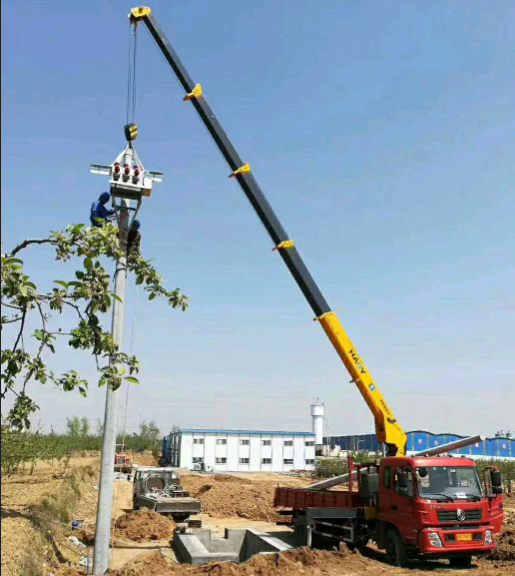
Customer Task: Hoisting communication equipment, antennas, etc., to rooftops or communication towers.
Site Limitations/Pain Points: Work sites are usually located at high altitudes, and the stability requirements for hoisting are extremely high. Some sites are located in remote areas with complex road conditions.
Why Straight Boom Cranes are More Suitable: Straight boom truck-mounted cranes use a winch system for vertical hoisting, resulting in a very stable process that effectively protects precision equipment. Their strong chassis adaptability allows them to handle various road conditions and reach remote work sites.
Benefits: Ensures the smooth progress of communication infrastructure construction. For leasing companies, this type of high-value-added business can bring higher rental income.
2.5 Large Equipment Emergency Repair and Rescue
Customer Task: Lifting malfunctioning construction machinery, agricultural machinery, or accident vehicles for on-site repair or towing.
Site Limitations/Pain Points: Rescue sites are complex and their locations are uncertain, requiring high response speed and lifting capacity from the equipment.
Why Straight Booms are More Suitable: Straight booms have a robust structure and high lifting torque, making them suitable for lifting heavy objects. Their rapid mobility ensures immediate arrival at the scene.
Benefits: Provides crucial social emergency support services. For leasing companies, this is an area of value-added services that can be expanded, effectively enhancing brand influence.
2.6 Agricultural and Forestry Operation Support

Customer Task: Lifting fertilizers, irrigation equipment, harvested timber, or bundles of crops in palm plantations, rubber forests, or farms.
Site Limitations/Pain Points: Operating environments are often unpaved, with soft ground and limited space.
Why Straight Booms are More Suitable: By selecting a suitable off-road chassis, straight boom truck-mounted cranes can adapt well to harsh terrain conditions. Its long boom reduces vehicle movement, enabling large-scale material handling from a stationary position.
Benefits: Significantly improves agricultural and forestry productivity, serving as a crucial tool for mechanized operations.
Ⅲ. Straight Boom vs. Knuckle Boom: A Key Decision Point in the Southeast Asian Rental Market
“Straight boom vs. knuckle boom: How to choose?” is a primary concern for many potential buyers. Both have their advantages and are suitable for different scenarios. For the Southeast Asian truck-mounted crane market, the choice depends on your core business.
Characteristics Comparison: Straight Boom Truck-Mounted Crane Knuckle Boom Truck-Mounted Crane
Operating Radius: Longer, suitable for open areas and long-distance high-altitude operations. Closer, but the boom is flexible, allowing access behind obstacles.
Lifting Height: Higher, stronger vertical lifting capability. Relatively lower, more suitable for horizontal operations.
Operating Speed: Faster, simpler structure, direct boom extension and lifting actions. More actions, slower for delicate operations.
Space Occupancy: Requires more turning space during operation. The foldable boom offers better adaptability to confined spaces.
Operating Precision: The winch provides smooth lifting, suitable for precise weight positioning. The multi-joint boom allows for precise, “point-and-shoot” operation.
Maintenance Costs: Simpler structure, fewer hydraulic points, relatively easy maintenance, and lower costs. More complex structure, more hydraulic joints, and higher maintenance requirements.
Price/Residual Value: Lower initial purchase cost, larger market share, and stable resale value. Higher price, but more versatile functionality.
For Southeast Asian leasing companies primarily engaged in conventional lifting operations such as construction, municipal works, and logistics, seeking high efficiency, low maintenance costs, and rapid return on investment, straight boom truck-mounted cranes are a more cost-effective choice.
Ⅳ. Thailand Market Insights: Why are “Multi-Joint Boom, Short Main Boom” Straight Boom Truck-Mounted Cranes More Popular?
Based on our long-term observations in the Thai market, a clear trend is that customers purchasing 3-8 ton straight boom truck-mounted cranes particularly prefer a “multi-joint boom, short main boom” configuration. For example, the original 4-section boom design was optimized to a 5-section boom, while maintaining the same total boom length.
This seemingly minor modification reflects profound localization needs:
Strengthened Road Adaptability: In cities and rural areas like Thailand, turning radii are small. A shorter boom means a shorter overall vehicle length in transport mode (shorter fully retracted length), allowing for more flexible turning and U-turns.
Saving Parking Space: Space-saving is essential for urban operations. The shorter retracted length allows the vehicle to be parked in smaller parking spaces or construction site corners, greatly improving convenience.
Maintaining Operating Range: By increasing the number of boom sections, the ideal operating height and radius are ensured when needed, without sacrificing functionality.
This “tailor-made” approach is the core difference between specialized suppliers like us and ordinary traders, and it’s key to ensuring our agents’ competitiveness in the local market.
Ⅴ. Selling Points Designed Specifically for Southeast Asian Conditions: Product Value from an ROI Perspective
A good straight-arm truck crane should not only be able to work, but also generate continuous profits for the owner. Our product design fully considers the unique environment of Southeast Asia and the profit logic of B2B clients.
5.1 Enhanced Corrosion Resistance and Heat Dissipation: Coping with Tropical Rainy Seasons and High Temperatures
The year-round high temperatures and humidity in Southeast Asia, as well as the salt spray in coastal areas, pose a significant challenge to the metal structure and hydraulic system of equipment. We offer:
Upgraded Coating Process: Utilizing thicker anti-rust primer and weather-resistant topcoat to effectively resist humid and hot corrosion.
High-Efficiency Hydraulic Radiator: Increased heat dissipation area ensures stable hydraulic oil temperature, preventing power loss even during prolonged continuous operation in hot weather. This is the core of tropical rust prevention and maintenance.
5.2 Flexible Chassis Matching and Optimized Outrigger Span
We understand the importance of a good machine. We provide professional chassis matching advice to ensure a perfect combination of crane and chassis performance. Meanwhile, we optimized the outrigger span design to adapt to narrow spaces as much as possible while ensuring stability, thus expanding the equipment’s operating range.
5.3 Easy Maintenance and Spare Parts Support: Ensuring High Uptime
For rental companies, a single day of downtime is a pure loss. We use universal, standardized parts to simplify the maintenance process. More importantly, we partner with dealers to establish local spare parts warehouses and provide technical training, ensuring your equipment can respond quickly and maximize uptime.
Ⅵ. How to Choose the Right Straight Boom Truck Crane for Your Business?
To help you clarify your thinking, we have prepared an inquiry parameter list. Before contacting us, consider the following questions, which will help us provide you with an accurate solution more quickly.
Truck Crane Selection Checklist
1. Main Purpose: What do you plan to use the equipment for? (e.g., lifting building materials, installing billboards, etc.)
2. Maximum Lifting Capacity: What is the heaviest object you typically need to lift? (tons)
3. Maximum Operating Radius/Height: How far or how high do you want to lift objects? (meters)
4. Chassis Preference: Do you have a preferred truck brand and model? (e.g., Isuzu, Hino)
5. Operating Environment: Primarily operating in cities, towns, or specific construction sites (e.g., ports, farms)?
6. Special Requirements: Are there any other requirements? (e.g., remote control operation, additional accessories, etc.)
Ready to enhance your business capabilities?