
Introduction
Wireless remote control has become a defining feature of modern truck-mounted cranes. As lifting operations move toward higher safety standards and greater operational efficiency, traditional manual levers and fixed control panels are gradually being replaced by intelligent remote systems.
But how exactly does a truck-mounted crane achieve wireless remote control? Behind this seemingly simple function lies a complex integration of hydraulic systems, electronic control units, sensors, and communication technology. Understanding this process helps operators, engineers, and buyers better evaluate crane performance and system reliability.
1. The Evolution from Manual Control to Wireless Operation
Early truck-mounted cranes relied entirely on mechanical or hydraulic lever systems. Operators were required to stand close to the crane base, manually controlling boom movement, rotation, and lifting functions. While functional, this approach posed clear safety risks, especially when handling heavy or unstable loads.
As electronic control technology advanced, cable-based remote controllers were introduced. These improved operator positioning but still limited movement and introduced wear-related failures. Wireless remote control systems emerged as the next logical step, allowing operators to maintain full control from a safe distance with greater flexibility and visibility.
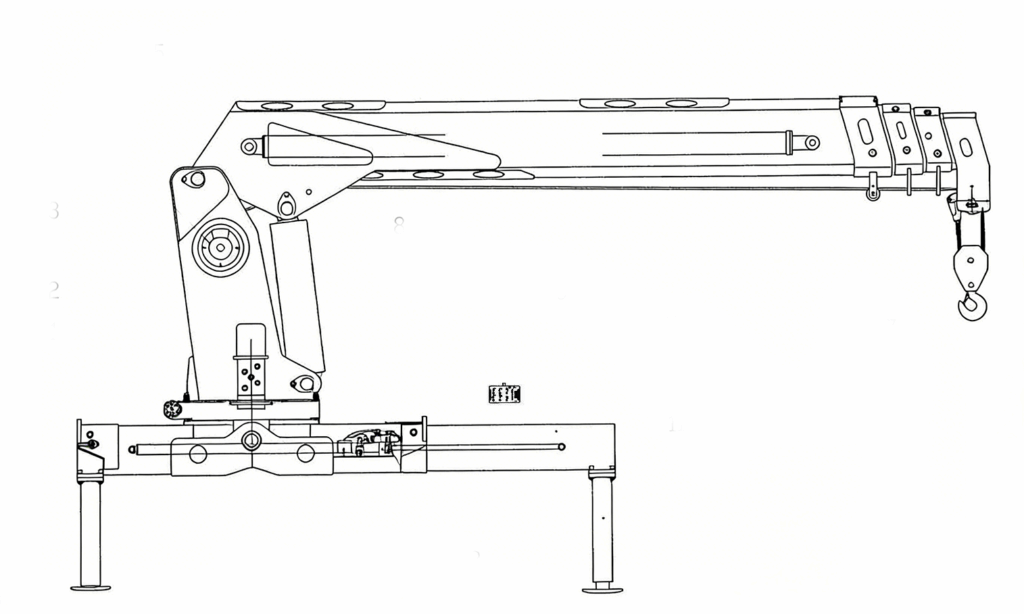
2. Core Components of a Wireless Remote Control System
A truck-mounted crane equipped with wireless remote control typically includes four primary subsystems working together:
Wireless Transmitter (Remote Controller)
Receiver Unit on the Crane
Electronic Control Unit (ECU)
Electro-hydraulic Actuation System
Each component plays a critical role in translating operator input into precise crane movements.
3. The Wireless Transmitter: Operator Interface
The wireless remote controller is the operator’s direct interface with the crane. It contains joysticks, buttons, switches, and safety controls that send command signals wirelessly to the crane system.
Modern transmitters are ergonomically designed to allow intuitive operation. Proportional joysticks enable smooth, variable-speed movements rather than simple on-off actions. Built-in safety features such as emergency stop buttons, signal encryption, and operator identification ensure controlled and secure operation.
To prevent accidental activation, many systems require authentication procedures, such as coded pairing or power-on sequences, before the crane can respond.
4. Signal Transmission and Reception
Wireless signals are transmitted using industrial radio frequencies specifically chosen for stability and resistance to interference. These signals travel from the handheld controller to a receiver mounted on the crane structure or control cabinet.
The receiver continuously monitors signal integrity. If communication is interrupted, the system automatically stops crane movement to prevent unintended operation. This fail-safe behavior is essential for compliance with modern safety standards.
Advanced systems also employ frequency-hopping or encrypted communication protocols, ensuring reliable operation even in environments with multiple wireless devices.
5. The Role of the Electronic Control Unit (ECU)
Once the receiver accepts a valid signal, it forwards the command to the electronic control unit. The ECU acts as the system’s central processor, interpreting input signals and converting them into precise control instructions.
The ECU evaluates multiple parameters simultaneously, including load conditions, boom angle, extension length, and hydraulic pressure. Based on this data, it determines whether the requested movement is safe and permissible.
If operating limits are approached, the ECU can automatically reduce speed or restrict movement, protecting both the crane and the operator.
6. Electro-Hydraulic Control: Turning Signals into Motion
Truck-mounted cranes rely on hydraulic power to perform lifting and articulation. Wireless remote control systems interface with this hydraulic system through electro-hydraulic valves.
When the ECU issues a command, it activates solenoid valves that regulate hydraulic oil flow to specific cylinders or motors. The amount of electrical input determines how much the valve opens, allowing precise control over speed and force.
This electro-hydraulic integration ensures that wireless commands result in smooth, proportional crane movements comparable to, or better than, traditional manual control.
7. Integration with Independent Power Systems
Many modern truck-mounted cranes, especially compact or pickup-mounted models, use independent power units rather than vehicle-driven systems. Wireless remote control integrates seamlessly with these self-contained hydraulic power sources.
The power unit supplies consistent hydraulic pressure regardless of vehicle engine status. This independence improves system stability and allows crane operation without engaging the truck transmission system.
From a control perspective, the ECU manages both the power unit and crane functions, ensuring synchronized operation and optimized energy use.
8. Safety Mechanisms in Wireless Crane Control
Safety is a core design priority in wireless crane control systems. Multiple layers of protection are built into both hardware and software components.
Common safety mechanisms include automatic shutdown on signal loss, emergency stop circuits, overload protection, and motion interlocks. Some systems also incorporate operator presence detection, preventing unauthorized or unattended operation.
Visual and audible feedback indicators on the remote controller inform operators of system status, battery level, and fault conditions in real time.
9. Advantages of Wireless Remote Control for Operators
Wireless control offers significant practical advantages during daily crane operations. Operators gain greater freedom of movement, allowing them to position themselves for the best possible view of the load and surroundings.
This improved visibility reduces the risk of collisions, load swing, and positioning errors. It also minimizes physical strain, as operators no longer need to remain near fixed control stations.
From a productivity standpoint, wireless operation often results in faster setup times and more efficient task execution, particularly in confined or complex work environments.
10. Reliability and Environmental Considerations
Industrial wireless systems are designed to operate reliably in harsh conditions. Remote controllers and receivers are typically sealed against dust and moisture and tested for vibration resistance.
This improved visibility reduces the risk of collisions, load swing, and positioning errors. It also minimizes physical strain, as operators no longer need to remain near fixed control stations.
These design considerations ensure consistent performance across construction sites, logistics yards, and municipal service environments.
11. Future Trends in Wireless Crane Control
As crane technology continues to evolve, wireless control systems are becoming smarter and more interconnected. Integration with digital displays, load monitoring systems, and diagnostic tools is increasingly common.
Future developments are expected to include enhanced sensor feedback, semi-autonomous operation modes, and improved data logging for maintenance and performance analysis.
These advancements will further strengthen the role of wireless remote control as a standard feature in truck-mounted crane design.
12. Conclusion: Precision Control Through Intelligent Integration
Wireless remote control in truck-mounted cranes is not a single technology but the result of intelligent system integration. By combining radio communication, electronic control, and hydraulic actuation, modern cranes achieve a high level of precision, safety, and operational flexibility.
For operators and equipment buyers alike, understanding how wireless control works provides valuable insight into crane performance and long-term reliability. As industry demands continue to rise, wireless remote control will remain a key element in the evolution of efficient and safe lifting solutions.