
Choosing a truck crane supplier in China requires more than comparing product photos and quoted prices. A reliable supplier should be able to translate your lifting requirement into a suitable crane configuration, document how the equipment is built and tested, and support installation and maintenance after delivery.
This guide gives international buyers a practical checklist for evaluating manufacturers, preparing an RFQ and reducing technical and commercial risk before ordering a truck mounted crane.
1. Define the Lifting Requirement Before Contacting Suppliers
A supplier cannot recommend the correct crane from maximum lifting capacity alone. Prepare a short application brief covering the heaviest load, maximum horizontal working radius, required lifting height, operating frequency and working environment.
- Load weight, dimensions and center of gravity
- Maximum working radius and lifting height
- Preferred knuckle boom or telescopic boom design
- Truck make, model, wheelbase, GVWR and available installation space
- Power take-off and hydraulic interface information
- Local certification, road and operator requirements
- Control method, outriggers and required attachments
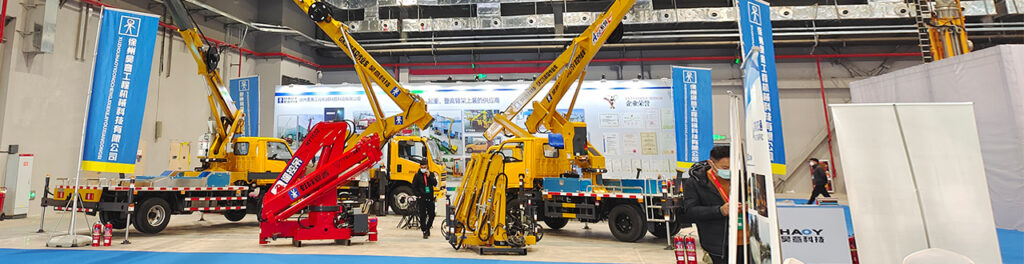
2. Confirm That the Company Is a Manufacturer
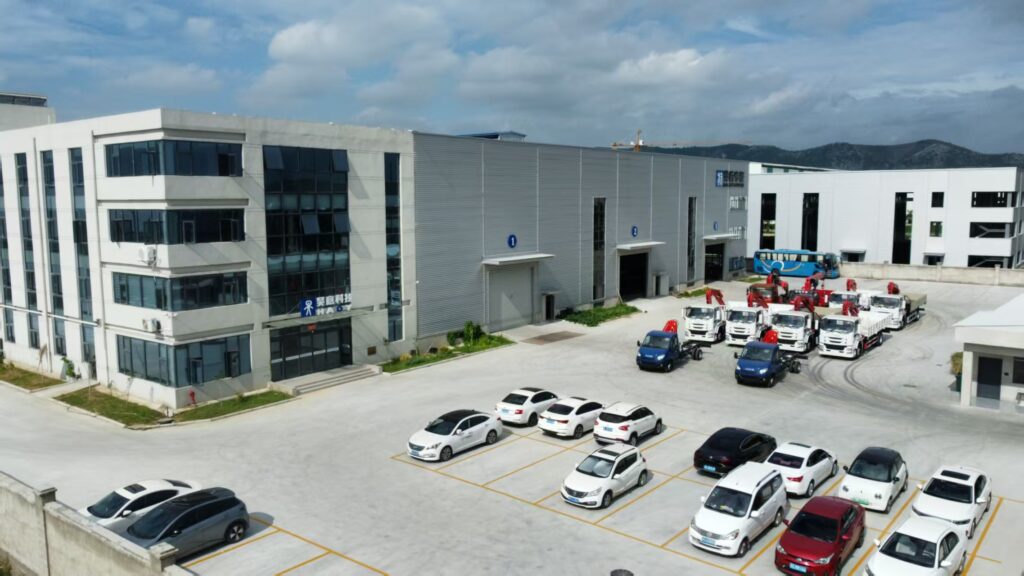
Ask the supplier to explain which operations are completed in-house and which components are purchased. A genuine manufacturer should be able to show current production, assembly, welding, painting, hydraulic testing and final inspection processes. A live video tour is useful when an on-site visit is not practical.
Check that the company name is consistent across its business registration, quotation, bank information, certificates and export documents. Differences should be explained before any order is placed.
3. Review Engineering and Chassis-Matching Capability
Truck crane performance depends on the complete vehicle, not only the crane. The supplier should request chassis drawings and review axle loads, wheelbase, frame dimensions, subframe design, PTO compatibility and available space for outriggers, hydraulic tank and accessories.
- General arrangement or installation drawing
- Crane self-weight and center-of-gravity information
- Recommended subframe and mounting details
- Hydraulic flow, pressure and tank requirements
- Outrigger span and installation envelope
- Load chart for the proposed model and configuration
4. Verify Product Documentation and Certification
Certification requirements vary by country and application. Do not accept a logo on a brochure as proof. Request a certificate copy, identify the issuing organization, check the model scope and confirm that the document is valid for the equipment being quoted.
The delivery package should also include an operation manual, maintenance schedule, hydraulic and electrical diagrams, spare-parts list, load chart, inspection record and serial-number information. Ask which documents can be supplied in your required language.
5. Examine Quality-Control and Testing Records
Request a written inspection plan instead of relying on general statements such as “strict quality control.” The plan should identify inspection points from incoming materials through welding, assembly, hydraulic commissioning and final testing.
| Stage | Evidence to Request |
|---|---|
| Materials | Material grade and traceability records for critical structural parts |
| Welding | Welder qualifications, procedure controls and inspection records |
| Assembly | Torque, clearance and hydraulic connection checks |
| Functional test | Movement, control, safety-device and leak-test results |
| Load test | Test procedure, configuration, results and equipment identification |
| Final inspection | Photographs, packing list and signed inspection report |
6. Assess Customization Without Losing Compliance
Useful customization may include boom type, control system, outrigger arrangement, mounting position, corrosion protection, attachments, color and branding. Structural or hydraulic changes must be reviewed by qualified engineers and reflected in the applicable drawings, load chart and documentation.
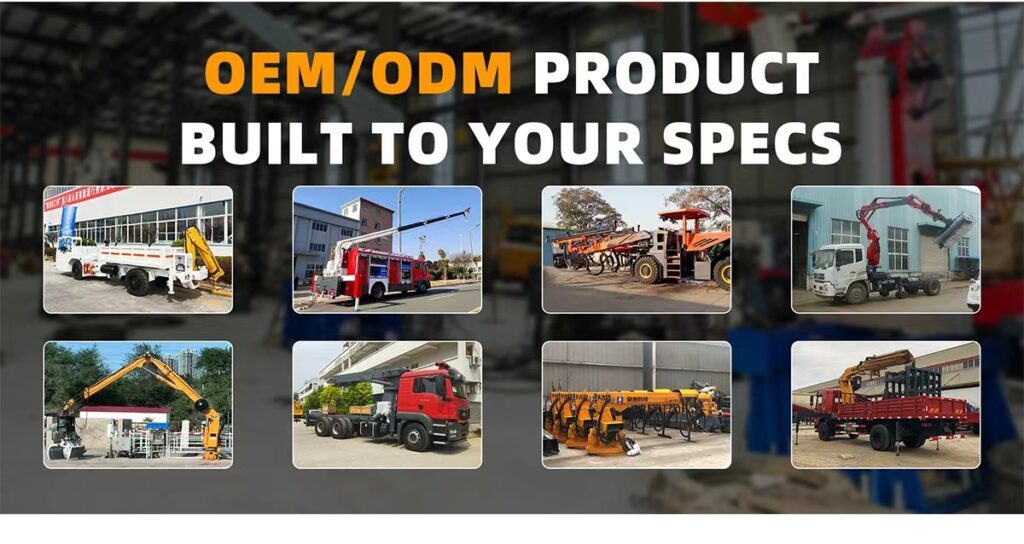
For a detailed planning sequence, read our OEM truck-mounted crane customization guide.
7. Compare Quotations on the Same Basis
The lowest price may exclude components or services included elsewhere. Build a comparison sheet that lists the exact model, rated capacity, load chart, boom sections, control method, outriggers, hydraulic package, attachments, documentation, packing, warranty, delivery term and after-sales support.
Clarify the Incoterm, port, container or break-bulk arrangement, insurance responsibility, installation scope and any chassis work. Record every agreed option in the final technical specification rather than relying on chat messages.
8. Check Warranty, Spare Parts and Technical Support
- What is covered and excluded by the warranty?
- When does the warranty period begin?
- Who diagnoses problems and approves replacement parts?
- Which recommended spare parts should ship with the crane?
- Are manuals, installation guidance and remote training available?
- How are urgent parts identified and dispatched?

9. Red Flags During Supplier Evaluation
- The supplier recommends a model without asking about load and radius.
- Load charts or installation drawings are unavailable.
- Company names differ across documents without a clear explanation.
- Technical questions receive only sales slogans.
- The quotation does not identify included options and exclusions.
- The supplier refuses a live inspection, video test or third-party audit.
- Warranty and spare-parts responsibilities are not written into the contract.
Truck Crane Supplier RFQ Checklist
Send the same information to every shortlisted supplier: application, load, radius, height, chassis data, operating environment, required standards, preferred controls, attachments, quantity, destination and requested delivery documents. Then ask each supplier to return a technical offer, commercial offer, load chart, drawing and delivery schedule.
Frequently Asked Questions
Should I choose a manufacturer or a trading company?
Either can be suitable if responsibilities are transparent. For customized equipment, direct access to engineering, production records and after-sales decision makers is especially valuable.
What should I request before paying a deposit?
At minimum, confirm the supplier identity, signed technical specification, model load chart, chassis interface, price inclusions, Incoterm, delivery schedule, payment stages, warranty and inspection plan.
Can I order one customized truck crane?
Many project-based crane orders can start with one unit when the configuration is technically feasible. Special components or completely new engineering may affect cost and lead time.
Conclusion
A dependable Chinese truck crane supplier should provide evidence, not only promises. Define the application, compare identical configurations, verify manufacturing and test records, and put documentation, warranty and support obligations into the contract.
HAOY supplies truck mounted cranes and customized hydraulic lifting equipment for international projects. Send our team your load, radius and chassis information to receive a model recommendation and technical quotation.