
Introduction
Truck-mounted cranes combine vehicle mobility with flexible lifting capabilities, making them widely used in logistics, infrastructure projects, and municipal work. By allowing loading, unloading, and short-distance transfer to be handled by the same vehicle, they reduce reliance on additional equipment and manual handling on site. In practical operation, however, efficiency and safety depend heavily on how the crane is set up and used. Improper operation can lead to unstable loads, equipment damage, or safety incidents, and can also slow down the workflow. For this reason, understanding standardized operating methods and adapting techniques to different working scenarios is an important part of using truck-mounted cranes effectively in real-world conditions.
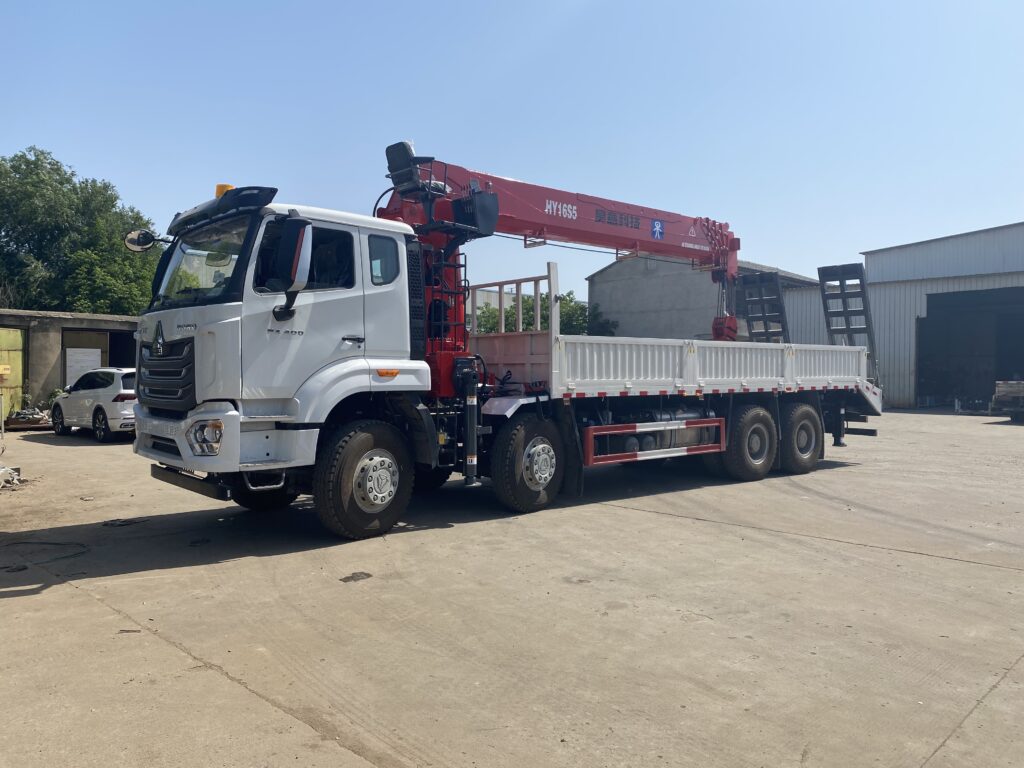
Ⅰ. Detailed Explanation of Typical Truck-Mounted Crane Operation Scenarios
1. Short-Distance Container Transfer Operations at Ports
First, confirm that the container weight matches the crane’s rated tonnage. Before the operation, fully extend the outriggers and pad them to prevent ground subsidence. When lifting, use specialized lifting tools to secure the container corner fittings. After lifting smoothly, slowly rotate the boom to avoid port obstacles. Keep the load stable during transfer, and strictly prohibit sudden stops and turns to prevent container swaying and collisions.
2. Construction Material Lifting at Building Sites
Precision and efficiency are key. When lifting long materials such as steel bars and pipes, both ends must be securely tied, and a traction rope must be installed to prevent swaying after lifting. When lifting heavy objects such as cement slabs and precast components, the center of gravity must be accurately located, the lifting speed must be uniform, and the lowering must be precisely aligned with the installation position. A warning zone must be established in the work area to prohibit unauthorized personnel from approaching.
3. Rural Infrastructure Construction
In rural infrastructure projects, tasks such as installing utility poles or concrete slabs are often carried out in tight or uneven spaces. In these situations, small folding boom truck-mounted cranes are commonly used because their flexible steering makes it easier to work around site constraints. During utility pole installation, workers may guide the pole by hand to help it rise steadily and align it with the foundation pit. Throughout the process, the boom’s reach and rotation must be carefully controlled to avoid contact with nearby trees, overhead lines, or other obstacles on the site.
4. Emergency Rescue Scenarios
In emergency response work, truck-mounted cranes are often used to clear accident vehicles from the road or to move relief supplies to the site. These situations usually require quick decisions, with the lifting plan adjusted based on actual conditions at the scene. Keeping rescue routes open is always the first priority. When handling accident vehicles, operators need to choose lifting points carefully and avoid damaged or loose components to reduce the risk of secondary movement or injury during lifting.
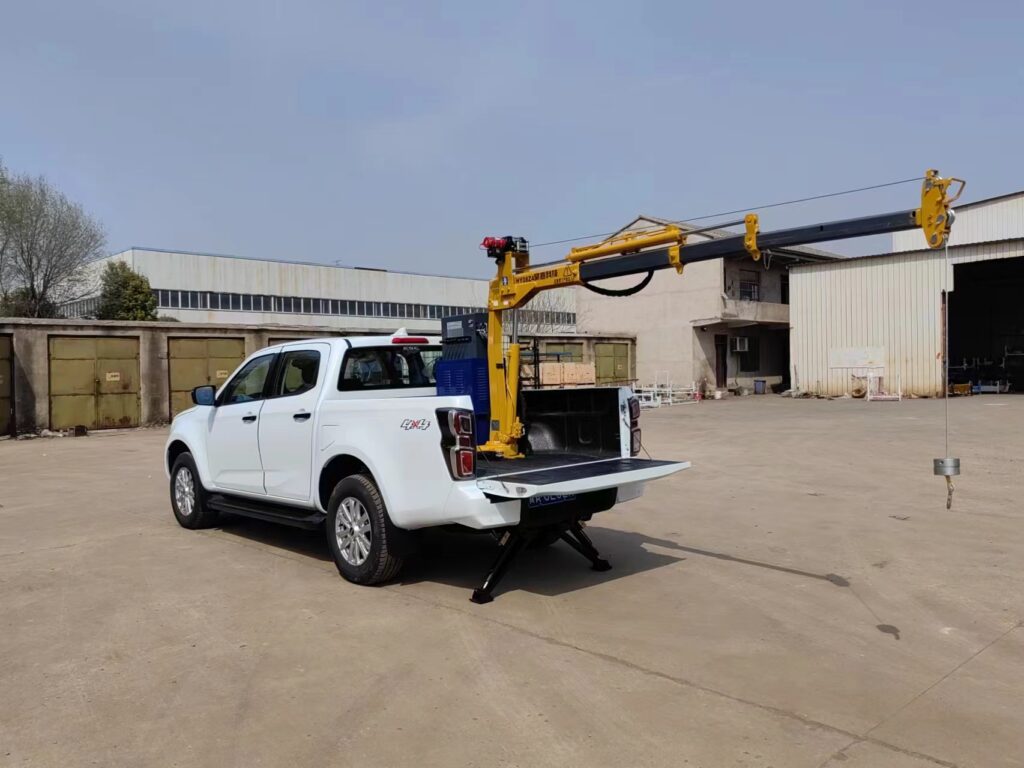
Ⅱ. Safety Operating Procedures for Truck-Mounted Cranes
1. A thorough pre-operation check is an essential part of safe crane operation. Before starting work, the hydraulic system should be inspected for leaks, and the proper oil level, and the wire ropes should be checked for wear, broken strands, or signs of loosening. Outriggers should be examined for deformation or sticking, and the slewing mechanism and braking system should be tested to ensure they respond smoothly and reliably. Only after confirming that all systems are functioning normally should the crane be put into operation.
2. There are three core prohibitions for lifting operations:
- Severe overloading: Even slight overloading can lead to boom breakage and hydraulic system failure.
- Slanted lifting: Slanted lifting increases equipment load and can easily cause the load to fall.
- Outdoor operation in winds exceeding level six can cause the load to swing uncontrollably.
3. When operating in confined spaces, the boom rotation range must be planned reasonably, using small amplitude and slow speed operations as much as possible. Adjust the vehicle position to coordinate with the lifting if necessary. When working at height, always monitor the boom height, avoid overhead power lines, bridges, and other obstacles. No one is allowed to stand under the boom, and all personnel must wear protective equipment. IV. Common Mistakes and Avoidance
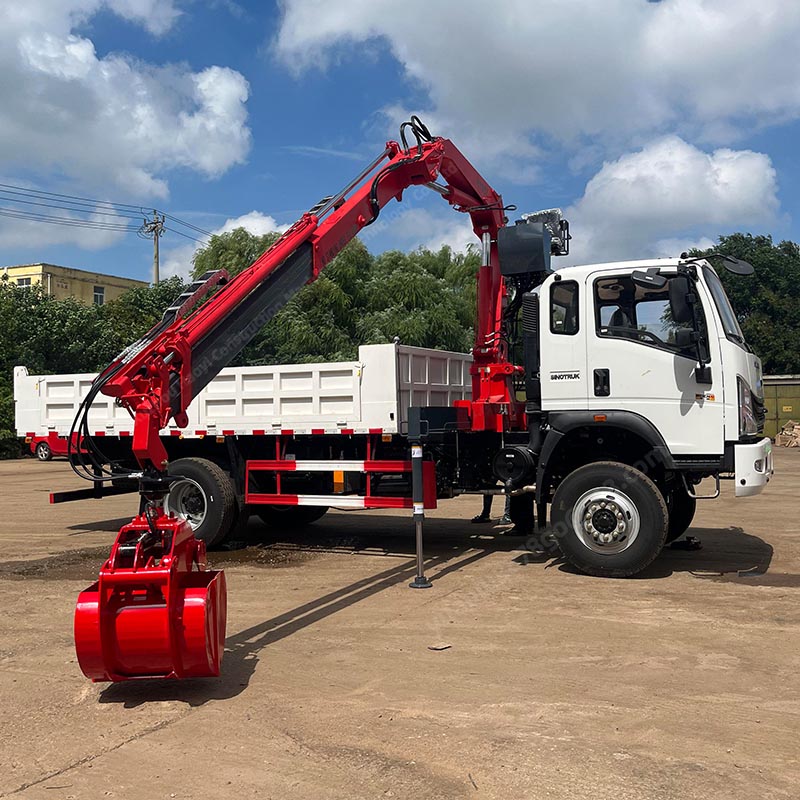
Ⅲ. Methods for Beginner Operators
1. Incomplete outrigger extension is a frequent mistake for beginners. Some beginners, to save time, only extend one outrigger or do not extend it fully, ignoring the difference in weight distribution on the ground. This easily leads to the equipment tipping over. The way to avoid this is to develop the habit of extending all outriggers before operation, ensuring they are fully extended and properly secured. If necessary, use a level to check if the equipment is stable.
2. Improper control of boom speed is a common issue, especially among less experienced operators. In an effort to finish the job quickly, lifting, lowering, or rotating is often done too quickly. This usually leads to a noticeable load swing, less accurate positioning, and increased wear on the crane over time. In practice, smoother results come from keeping movements steady and controlled, adjusting speed to match the load. Heavier loads in particular should be lifted and lowered more slowly to maintain stability and reduce stress on the equipment.
3. Incorrect load securing is one of the main causes of load falls. Examples include using ordinary ropes instead of specialized lifting equipment, securing the load off-center, or securing it too loosely. Beginners need to learn different securing techniques for different types of goods, select appropriate lifting equipment based on the shape and weight of the load, ensure secure securing and accurate center of gravity, and add securing points to improve stability if necessary.
Conclusion
The operational efficiency and safety of truck-mounted cranes depend primarily on standardized operations, mastery of key points in different scenarios, and adherence to safe operating rules. Skills can prevent accidents, reduce equipment failures, and extend service life. In daily operations, operators need to continuously accumulate practical experience, remember operational taboos, and avoid common mistakes to maximize the value of the truck-mounted crane in various scenarios. At the same time, regular participation in professional operations training and timely updating of practical skills are also important prerequisites for ensuring long-term, safe, and efficient operation.