
Introduction
As lifting equipment continues to evolve toward higher efficiency and flexibility, self-propelled truck-mounted cranes have emerged as a practical solution for modern material handling. Unlike conventional truck cranes that rely entirely on the vehicle’s main engine for hydraulic power, self-propelled truck-mounted cranes integrate an independent power system directly into the crane structure itself.
This design approach significantly improves energy efficiency, operational independence, and installation flexibility—making it especially attractive for light-duty trucks, pickup-mounted cranes, and specialized service vehicles. To understand why this crane type is gaining attention, it is important to examine how it works, what differentiates it from traditional systems, and where it delivers the greatest value.
1. Defining a Self-Propelled Truck-Mounted Crane
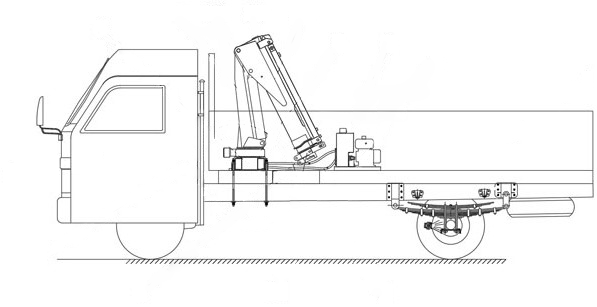
A self-propelled truck-mounted crane is a lifting system installed on a truck or pickup platform that features its own independent power unit. Instead of drawing hydraulic power from the truck’s power take-off system, the crane operates using a dedicated engine-driven hydraulic pump—typically housed within the cargo bed or near the crane base.
This self-contained configuration allows the crane to function without engaging the vehicle’s main engine. As a result, the crane can operate more efficiently, with better control over power output and reduced mechanical stress on the truck transmission system.
From a structural standpoint, the crane is mounted on a reinforced base that connects securely to the truck frame. A slewing mechanism enables rotation, while hydraulic cylinders control lifting, extension, and articulation of the boom.
2. How the Self-Propelled Power System Works
The defining feature of this crane type is its independent hydraulic power source. A compact engine—often gasoline-powered for light vehicles—drives a hydraulic pump station installed within the cargo compartment.
Hydraulic oil flows from the pump to the crane through dedicated supply and return lines, powering lifting cylinders, rotation motors, and extension mechanisms. Once the operation is complete, the oil circulates back to the reservoir, forming a closed and efficient hydraulic loop.
Because the power system is isolated from the truck engine, the crane can operate at optimal hydraulic pressure without unnecessary fuel consumption. This design also allows the vehicle engine to remain off or idle during lifting operations, reducing wear, noise, and emissions.
3. Structural Layout and Key Components
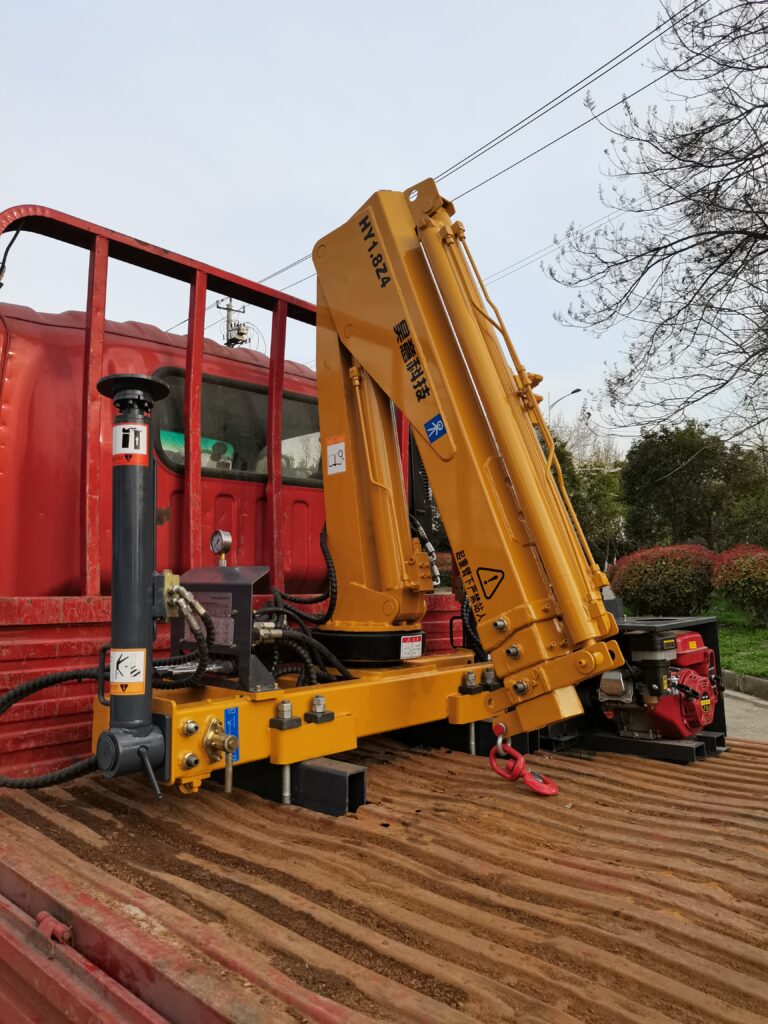
A typical self-propelled truck-mounted crane consists of several core components working together as a unified system:
- Mounting Base: Anchors the crane securely to the truck frame or cargo bed, ensuring structural stability during lifting.
- Rotary Support Assembly: Enables smooth 360-degree rotation of the crane superstructure.
- Independent Power Unit: Includes the engine, hydraulic pump, oil tank, and control valves.
- Crane Boom System: Composed of a main boom, articulated arms, and lifting hook or attachment.
- Hydraulic Cylinders: Drive lifting, extension, and angular adjustments.
- Control Interface: Allows operators to manage crane movements with precision.
This compact and modular layout makes the system especially suitable for vehicles with limited space while maintaining reliable lifting performance.

4. Advantages Over Traditional PTO-Driven Cranes
Traditional truck-mounted cranes depend on the vehicle’s power take-off system, which requires the truck engine to run continuously during crane operation. This approach introduces several limitations that self-propelled cranes effectively overcome.
First, independent power systems eliminate excessive fuel consumption caused by oversized truck engines running solely to power hydraulic equipment. Second, they reduce mechanical wear on the transmission and PTO components. Third, they provide greater flexibility in vehicle selection, as the crane does not rely on specific transmission system configurations.
From an operational perspective, self-propelled cranes offer smoother hydraulic control, quicker startup, and improved reliability—especially in applications where frequent short lifting tasks are required.
5. Energy Efficiency and Environmental Benefits
Energy efficiency is one of the most compelling reasons for adopting self-propelled truck-mounted cranes. By matching the power output of the independent engine precisely to the crane’s hydraulic requirements, energy waste is significantly reduced.
Lower fuel consumption directly translates into reduced emissions and operating costs. In urban environments or enclosed work areas, quieter operation and lower exhaust output also contribute to safer and more environmentally responsible job sites.
For businesses focused on sustainability and long-term cost control, this efficiency advantage makes self-propelled crane systems an increasingly attractive investment.
6. Installation Flexibility and Compact Design
Another key benefit lies in installation versatility. Since the crane and its power unit are integrated into the cargo area, the system does not require complex modifications to the vehicle’s drivetrain. This simplifies installation and allows the crane to be mounted on a wide range of trucks, including light-duty pickups.
The compact footprint of the power unit and crane base preserves valuable cargo space while maintaining balanced weight distribution. For service vehicles, utility trucks, and mobile repair units, this balance between lifting capability and cargo capacity is essential.
7. Typical Applications and Use Cases
Self-propelled truck-mounted cranes are widely used in scenarios where mobility, efficiency, and independence are critical. Common applications include:
- Equipment installation and maintenance
- Construction support and material loading
- Municipal services and infrastructure repair
- Agricultural and forestry operations
- Logistics and small-scale cargo handling
Their ability to operate without relying on external power sources makes them particularly effective in remote or temporary work environments.
8. Safety and Operational Reliability
Safety remains a core consideration in crane design, and self-propelled systems offer several advantages. Stable hydraulic output ensures predictable movements, while independent controls reduce the risk of sudden power fluctuations.
Because the crane system is isolated from the truck engine, there is less chance of accidental movement caused by vehicle operation. Additionally, integrated safety valves and controlled oil flow enhance load stability and operator confidence.
9. Future Trends in Self-Propelled Crane Technology
As lifting equipment continues to modernize, self-propelled truck-mounted cranes are expected to integrate smarter control systems, improved materials, and cleaner power sources. Enhanced automation, sensor-based monitoring, and hybrid or electric power units are likely to define the next generation of these cranes.
With growing demand for flexible, energy-efficient lifting solutions, self-propelled designs are well positioned to become a standard option across multiple industries.
Conclusion: A Smarter Approach to Mobile Lifting
A self-propelled truck-mounted crane represents a thoughtful evolution in mobile lifting technology. By separating crane power from vehicle propulsion, it delivers greater efficiency, flexibility, and operational control.
For companies seeking reliable lifting performance without unnecessary fuel consumption or mechanical complexity, this crane type offers a practical and forward-looking solution. As industries continue to prioritize efficiency and adaptability, self-propelled truck-mounted cranes are set to play an increasingly important role in modern material handling.