
Shipping is an important part of buying a truck mounted crane from an overseas supplier. After the buyer confirms the crane model, configuration, load test, and final inspection, the next question is usually: how will the crane be shipped safely to my country?
A truck mounted crane can be shipped in different ways depending on whether it is delivered as a crane-only unit, installed on a truck chassis, packed as a complete vehicle, or shipped as a customized lifting system. Common shipping methods include container shipping, flat rack shipping, Ro-Ro shipping, and bulk cargo shipping. The best method depends on crane size, truck dimensions, destination port, budget, delivery schedule, and whether local installation is required.
For international buyers, the shipping method is not only a logistics issue. It affects total cost, customs clearance, installation planning, risk of transportation damage, spare parts preparation, and delivery time. This article explains how truck mounted cranes are shipped overseas and what buyers should check before shipment.
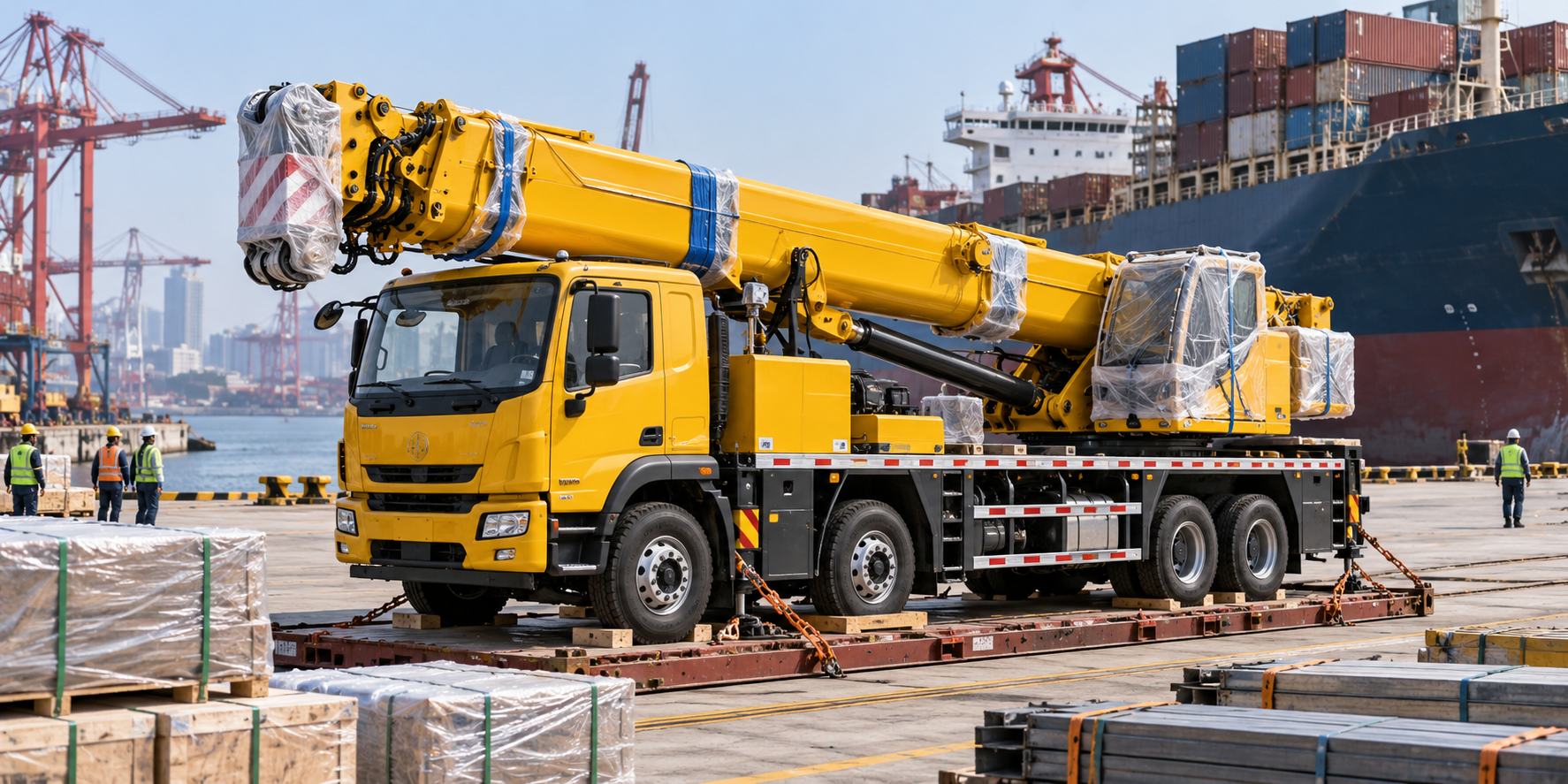
1. Why Shipping Method Matters for Truck Mounted Cranes
A truck mounted crane is large, heavy, and often customized. It may include a boom, hydraulic cylinders, outriggers, control valves, oil tank, remote control system, sub-frame, mounting base, and accessories. If it is not packed and fixed correctly, parts may be damaged during loading, sea transportation, unloading, or local inland delivery.
The shipping method affects several key points:
- Whether the crane can fit into a standard container
- Whether the truck and crane can be shipped as a complete vehicle
- Whether special loading equipment is needed
- How much the freight cost will be
- How the crane should be protected from rain, salt, and vibration
- Whether local installation will be required after arrival
- What documents are needed for customs clearance
A reliable supplier should discuss shipping before production is completed, not at the last minute. For customized projects, shipping dimensions and packing methods should be considered as part of the delivery plan.
2. Crane-Only Shipment vs. Crane Mounted on Truck
Before choosing a shipping method, buyers should first confirm whether they are importing only the crane or a complete truck mounted crane vehicle.
| Shipment type | Suitable for | Main consideration |
|---|---|---|
| Crane-only shipment | Buyers who will install the crane on a local truck chassis | Requires installation guidance, drawings, and local workshop capability |
| Crane mounted on truck | Buyers who want a complete working vehicle | Requires larger shipping space and vehicle import compliance |
| Crane with sub-frame and accessories | Buyers who need easier local installation | Packing and labeling must be clear |
| SKD or partially disassembled shipment | Projects with size limits or freight cost control | Requires careful assembly support after arrival |
Crane-only shipment is common when the buyer already has a local truck chassis. This can reduce shipping size and may make customs clearance easier in some markets. However, the buyer must make sure the local chassis can match the crane and that installation drawings are available. A complete crane truck shipment is more convenient for end users who want a ready-to-use solution. However, it may require Ro-Ro shipping, flat rack shipping, or bulk cargo, depending on the total vehicle size.
For boom choices, buyers can compare a knuckle boom truck mounted crane, a telescopic boom truck mounted crane, or a compact mini truck crane before confirming shipping dimensions.
3. Container Shipping for Truck Mounted Cranes
Container shipping is one of the most common international shipping methods. For crane-only units or smaller truck mounted cranes, a standard 20-foot or 40-foot container may be used if the dimensions allow.

Container shipping offers better protection from weather and seawater, common shipping routes, relatively easy logistics arrangement, and suitability for crane-only units, parts, accessories, mini truck cranes, and compact crane packages.
However, not every truck mounted crane can fit into a standard container. The supplier must measure the crane length, width, height, boom folded size, outrigger dimensions, and packing frame size before confirming container loading. If the crane is shipped inside a container, it should be fixed securely to prevent movement during sea transportation. Hydraulic hoses, control boxes, cylinders, remote control parts, and painted surfaces should be protected.
4. Flat Rack Shipping
Flat rack shipping is used when the cargo is too wide, too tall, or too long for a standard container. A flat rack container has no side walls and can carry oversized equipment.
Flat rack shipping may be suitable for:
- Large truck mounted cranes
- Crane trucks that cannot fit into a standard container
- Long boom structures
- Wide outrigger systems
- Partially assembled equipment
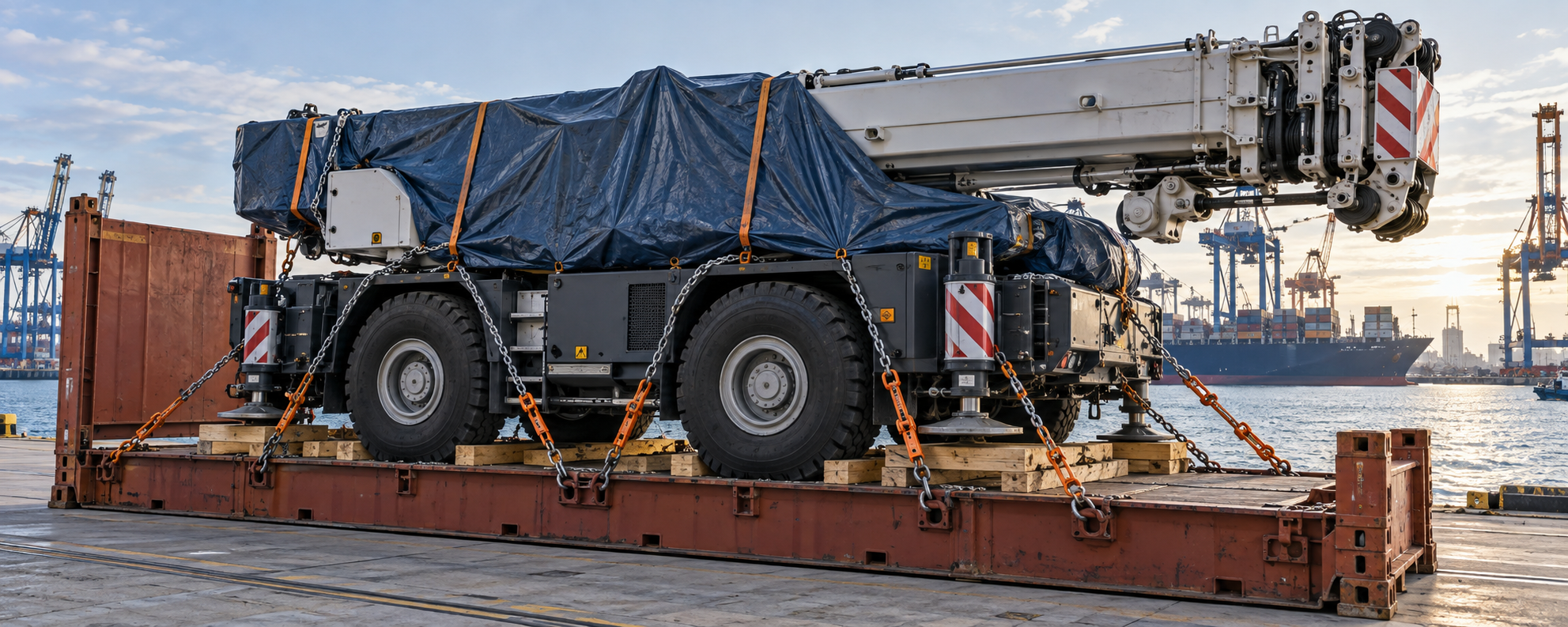
The main advantage of flat rack shipping is that it can handle oversized cargo. The disadvantage is usually higher freight cost and more exposure to weather. Therefore, proper waterproof protection, anti-rust treatment, and strong lashing are very important. Buyers should ask for loading photos, lashing photos, waterproof covering photos, and final packing confirmation before the flat rack leaves the factory or port.
5. Ro-Ro Shipping
Ro-Ro means roll-on/roll-off. It is commonly used for complete vehicles, including trucks, construction machinery, and special vehicles. If the truck mounted crane is already installed on a truck chassis and can be driven, Ro-Ro shipping may be a practical option.
Ro-Ro shipping is suitable when the crane is mounted on a complete truck chassis, the vehicle can drive onto the vessel, the destination port supports Ro-Ro service, the buyer wants to import a complete vehicle, or container loading is not possible due to vehicle size.
Ro-Ro shipping can reduce some loading complexity because the vehicle is driven onto the ship. However, buyers should check port availability, vehicle import rules, insurance, and possible handling at the destination port. The crane boom should be locked, outriggers secured, accessories fixed, and batteries or fuel handled according to shipping requirements.
6. Bulk Cargo Shipping
Bulk cargo shipping may be used for very large equipment or special shipments that cannot use standard containers, flat racks, or Ro-Ro vessels. The cargo is loaded by crane onto a vessel and secured on board.
Bulk cargo is usually considered for oversized, heavy, or special project cargo. It requires careful coordination among the supplier, freight forwarder, port, shipping company, and buyer. Strong packing, lifting points, lashing positions, and transport protection should be planned in advance. For most standard truck mounted crane orders, container, flat rack, or Ro-Ro shipping is more common. Bulk cargo is usually project-specific.
7. How the Crane Is Packed and Fixed
Good packing is essential for overseas shipment. The purpose is to prevent movement, impact, corrosion, paint damage, hydraulic damage, and missing accessories. Packing and fixing may include:
- Steel frame or wooden case for crane-only shipment when required
- Strong base fixing to prevent movement
- Boom folded and secured in transport position
- Outriggers retracted and locked
- Hydraulic hoses and fittings protected
- Control box and remote control packed separately if needed
- Spare parts packed and labeled clearly
- Waterproof covering for exposed cargo
- Anti-rust protection for sea transportation
- Clear marks for lifting points and handling instructions
Buyers should confirm whether the supplier will provide packing photos before shipment. These photos help verify that the crane is fixed properly and that accessories are included.
8. What Photos Buyers Should Request Before Shipment
For overseas buyers who cannot inspect the cargo in person, photos and videos are very important. They provide evidence of product condition before the crane leaves the factory. Request final product photos, a load test video, boom and outrigger photos, hydraulic system photos, a nameplate photo, packing photos, container loading photos, and accessory photos.
| Photo or video | Why it is useful |
|---|---|
| Final product photos | Confirm model, color, logo, and configuration |
| Load test video | Verify lifting and hydraulic performance |
| Boom and outrigger photos | Confirm key structural parts |
| Hydraulic system photos | Check hoses, cylinders, valves, and fittings |
| Nameplate photo | Confirm model and basic information |
| Packing photos | Confirm protection and fixing method |
| Container loading photos | Confirm loading position and cargo quantity |
| Accessory photos | Confirm spare parts, remote control, manuals, and tools |
For a deeper pre-shipment checklist, see what buyers should check in a truck mounted crane load test.
9. Export Documents Buyers May Need
The required export documents may vary by destination country, shipping method, product type, and buyer requirements. Buyers should confirm local import rules with their customs broker before shipment. Common documents may include:
- Commercial invoice
- Packing list
- Bill of lading
- Sales contract
- Certificate of origin if required
- Product specification
- Operation manual
- Load chart
- Spare parts list
- Test photos or videos
- Insurance documents if arranged
- Other documents required by the destination market
For a complete vehicle shipment, additional vehicle-related documents may be required. For crane-only shipment, technical drawings and installation guidance may be more important for the buyer.
10. How to Reduce Shipping Damage Risk
Shipping damage can cause delays, repair costs, and disputes. Buyers and suppliers should work together to reduce risk before shipment.
- Confirm shipping dimensions before booking
- Choose a suitable shipping method based on cargo size
- Request load test and final inspection before shipment
- Protect hydraulic parts and electrical components
- Fix the boom, outriggers, and accessories securely
- Use waterproof and anti-rust protection when needed
- Take detailed photos before and after loading
- Label spare parts and accessories clearly
- Confirm insurance options with the freight forwarder
- Prepare unloading requirements before arrival
A careful shipping process can reduce problems after arrival and help the buyer start installation or operation faster. Buyers can also review common quality problems when sourcing a truck mounted crane before approving final shipment.
11. What Buyers Should Prepare Before Arrival
Before the crane arrives at the destination port, the buyer should prepare customs clearance, inland transportation, unloading equipment, installation workshop, and local technicians if needed.
- Customs broker and import documents
- Destination port and delivery address
- Forklift, crane, or unloading equipment if needed
- Storage area for the crane and accessories
- Truck chassis if the crane will be installed locally
- Installation tools and workshop plan
- Local hydraulic oil and maintenance materials
- Technicians who can follow installation drawings
- Communication channel with the supplier for remote guidance
If the crane is shipped without a truck chassis, local installation planning is especially important. The buyer should confirm chassis information, sub-frame requirements, hydraulic power source, and installation dimensions before the cargo arrives. The truck mounted crane and truck chassis matching guide can help with this step.
12. How HAOY Supports Overseas Shipping
HAOY can support overseas buyers with project-based delivery planning for customized truck mounted cranes, marine cranes, mini truck cranes, and vehicle-mounted aerial work vehicles. Depending on the order type, the equipment can be arranged as crane-only shipment, complete vehicle shipment, or customized packing solution.
Before shipment, buyers can request load test videos, product detail photos, packing photos, loading photos, and basic technical documents. For customized projects, shipping method can be discussed according to crane dimensions, truck chassis, destination country, and buyer requirements.
For buyers starting with one unit, HAOY can help confirm whether container shipping, flat rack shipping, Ro-Ro shipping, or another method is more suitable. This helps reduce uncertainty and supports smoother overseas delivery.
FAQ About Overseas Shipping for Truck Mounted Cranes
Can a truck mounted crane be shipped in a container?
Yes, some crane-only units and compact models can be shipped in a standard container if the dimensions allow. Large cranes or complete crane trucks may require flat rack, Ro-Ro, or other shipping methods.
Is it better to ship the crane only or the complete truck mounted crane?
It depends on the buyer’s needs. Crane-only shipment may reduce shipping size and allow local chassis installation. A complete crane truck is more convenient if the buyer wants a ready-to-use vehicle.
What should buyers check before shipment?
Buyers should check load test videos, final product photos, packing photos, accessory lists, nameplate photos, load charts, and shipping documents.
How can shipping damage be reduced?
The crane should be fixed securely, protected from rain and corrosion, packed properly, and photographed before loading. Accessories and spare parts should be labeled clearly.
What documents are usually needed for export?
Common documents include commercial invoice, packing list, bill of lading, sales contract, certificate of origin if required, product specification, load chart, operation manual, and spare parts list.
Can buyers request loading photos?
Yes. Buyers should request container loading photos, flat rack fixing photos, Ro-Ro preparation photos, or packing photos before shipment confirmation.
Does HAOY support one-unit overseas shipment?
Yes. HAOY can support customized truck mounted cranes and other lifting equipment from one unit, with shipping method discussed according to cargo size and destination requirements.
Conclusion
A truck mounted crane can be shipped overseas by container, flat rack, Ro-Ro, bulk cargo, or other logistics solutions depending on the crane size, truck chassis, packing method, and destination port. The correct shipping method helps reduce damage risk, control cost, and support smooth delivery.
Before shipment, buyers should confirm whether the crane will be shipped as a crane-only unit or as a complete vehicle. They should also request load test videos, final inspection photos, packing photos, loading photos, shipping dimensions, accessory lists, and export documents.
For customized truck mounted cranes, shipping should be planned together with product configuration, installation method, and destination requirements. A reliable supplier should help buyers choose a practical shipping method and provide clear pre-shipment confirmation materials.
By checking the right details before delivery, buyers can reduce logistics risk, avoid missing accessories, protect the equipment during sea transportation, and prepare for installation or operation after arrival.