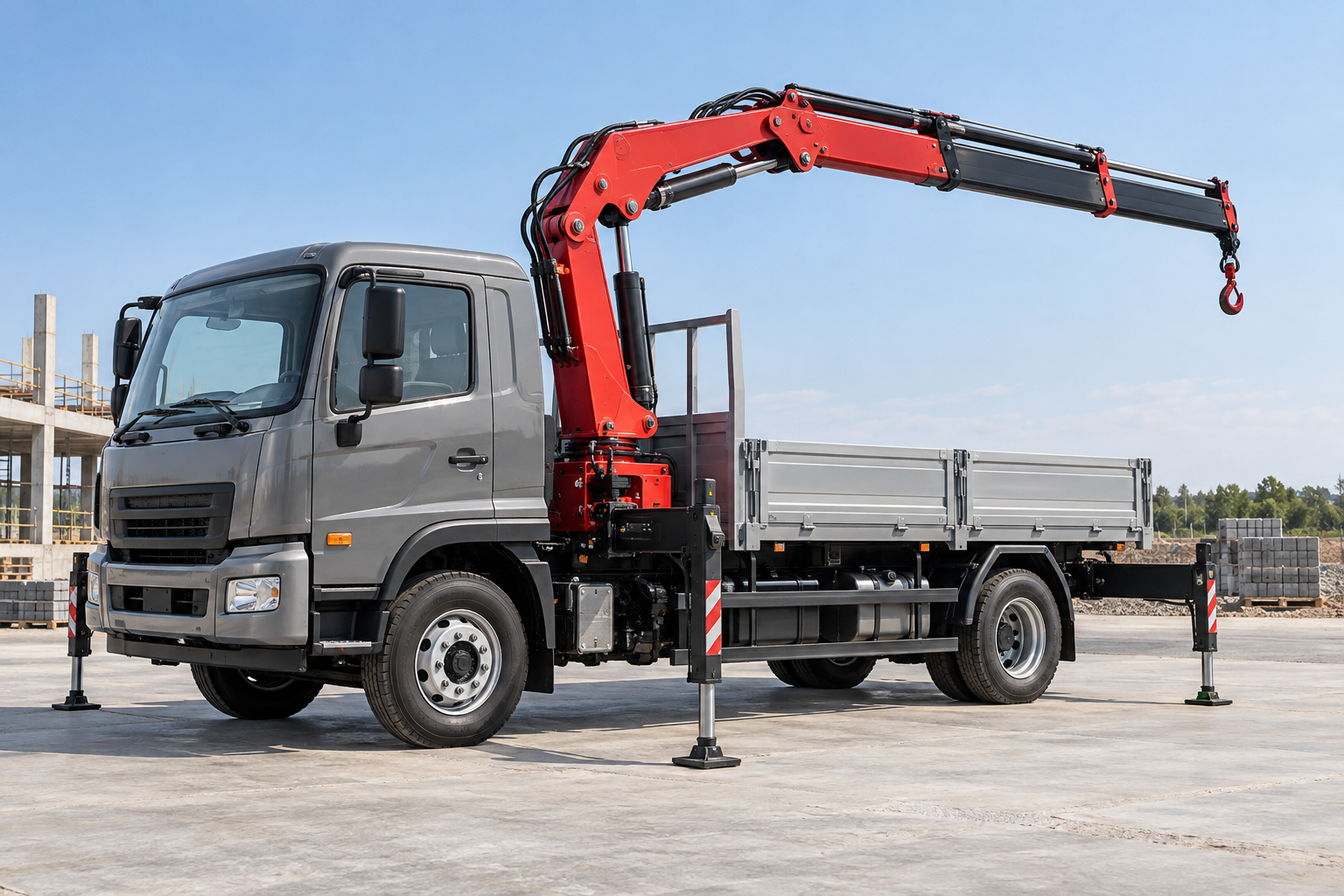
Sourcing a truck mounted crane is not the same as buying a standard machine from stock. A truck mounted crane must work together with the truck chassis, hydraulic system, outriggers, boom structure, installation frame, control system, and real jobsite conditions. If any part is poorly designed or manufactured, the crane may face safety risks, unstable operation, short service life, or high maintenance costs.
For international buyers, especially contractors, dealers, fleet owners, utility companies, and construction material suppliers, the biggest risk is not only price. The real risk is buying a crane that looks acceptable in photos but fails to perform reliably after delivery.
Common problems may include weak boom structure, poor welding, unstable hydraulic movement, oil leakage, inaccurate load capacity, poor outrigger stability, low-quality painting, electrical failure, lack of technical drawings, and insufficient after-sales support.
Haoy, from Xuzhou Haoyi Engineering Machinery Technology Co., Ltd., focuses on customized truck mounted crane solutions for different applications. The company supplies truck mounted cranes, knuckle boom cranes, telescopic boom cranes, Marine Crane, vehicle-mounted aerial work vehicles, and other lifting equipment. For more details, visit the Truck Mounted Crane Product Page. For customized projects, Haoy can support OEM and ODM orders from one unit, helping buyers match the crane with their actual truck chassis and working conditions.
This article explains the most common quality problems when sourcing truck mounted cranes and how buyers can evaluate suppliers more professionally.
1. Boom Structure Problems
The boom is one of the most important parts of a truck mounted crane. It directly affects lifting capacity, working radius, stability, and service life.
Common boom quality problems include insufficient structural strength, poor steel material selection, boom deformation under load, inaccurate boom section alignment, poor telescopic movement, loose connection between boom sections, weak welding in high-stress areas, and poor surface treatment before painting.
Some suppliers may only emphasize maximum lifting capacity but do not provide enough information about boom structure, boom sections, load chart, or working radius. This can mislead buyers.
A crane marked as “8 ton” does not mean it can lift 8 tons at every radius. Actual lifting capacity decreases as the working radius increases. Therefore, buyers should check both the rated capacity and the load chart.
Haoy Advantage
Haoy provides different truck mounted crane solutions, including knuckle boom and telescopic boom types. The selection is not based only on tonnage, but also on working radius, installation space, truck chassis, and application scenario.
For example, a knuckle boom truck mounted crane is suitable for compact installation, flexible operation, and limited working space. A telescopic boom crane is more suitable when the buyer needs longer straight-line outreach. By matching boom type with actual application, Haoy helps reduce the risk of incorrect product selection.
2. Welding Quality Problems
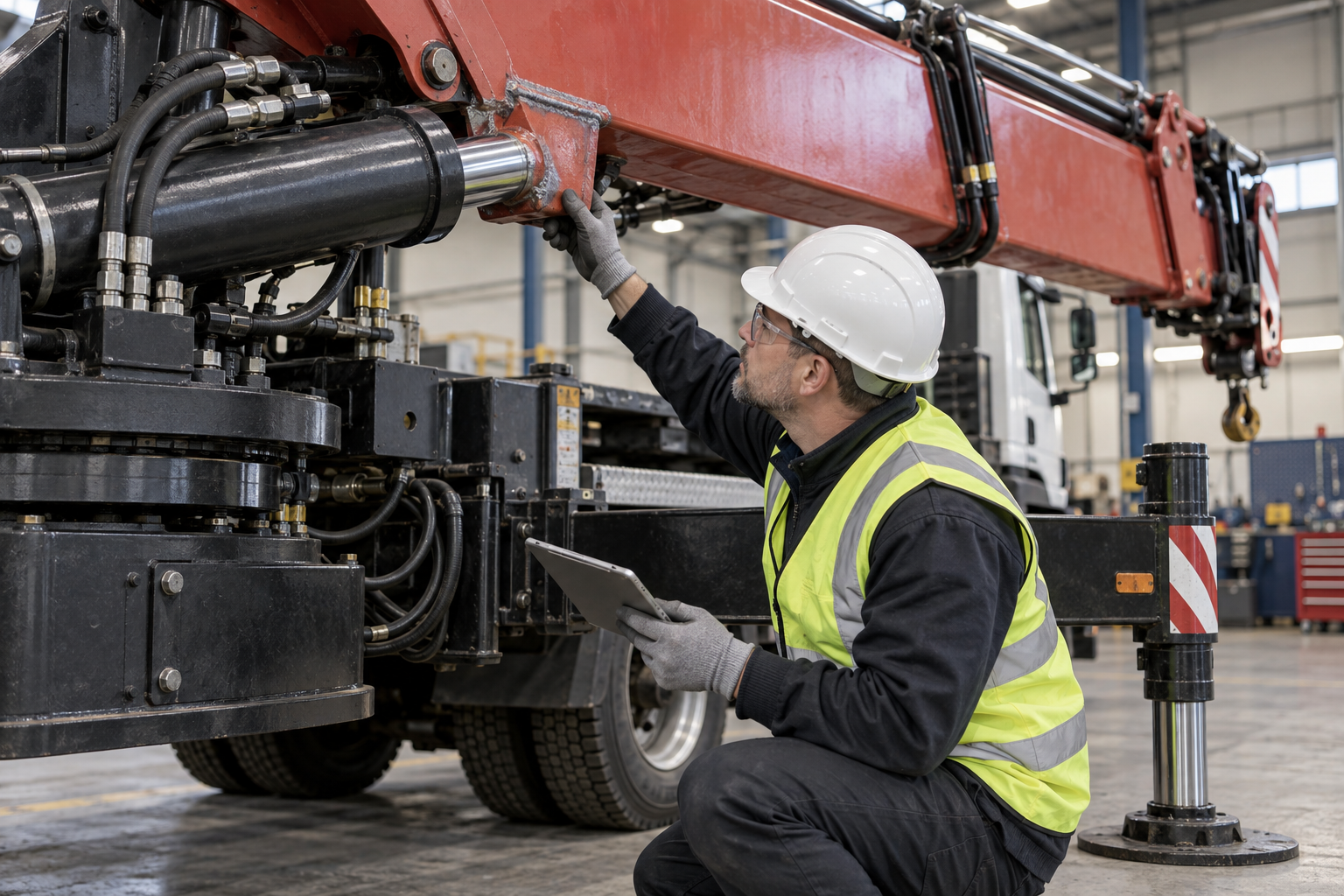
Welding quality is a key factor in truck mounted crane safety. Poor welding may not be obvious in product photos, but it can create serious risks during long-term use.
Common welding problems include uneven weld beads, lack of penetration, cracks near welded areas, welding deformation, poor grinding and finishing, weak welding around boom, base, and outriggers, and inconsistent welding process between different batches.
Truck mounted cranes often work under repeated load cycles. If welding quality is unstable, fatigue cracks may appear after the crane has been used for a period of time.
Haoy Advantage
For lifting equipment, Haoy emphasizes structural manufacturing and quality inspection before delivery. Buyers should request welding detail photos, production process photos, and load test videos when confirming an order.
A reliable manufacturer should not only show finished product photos. It should also show how the crane is produced, assembled, tested, and checked. This is especially important for overseas buyers who cannot inspect the factory in person.
3. Hydraulic System Leakage
Hydraulic system quality directly affects the crane’s operating smoothness, lifting force, movement speed, and reliability.
Common hydraulic problems include oil leakage from fittings, cylinder seal failure, unstable boom movement, slow lifting or extension, overheating during continuous work, low-quality valves or hoses, poor hydraulic pipeline layout, and difficult maintenance access.
Some buyers only compare crane capacity and price, but ignore the hydraulic system. This is a mistake. Even if the steel structure looks strong, a poor hydraulic system can make the crane difficult to operate and expensive to maintain.
Haoy Advantage
Haoy’s truck mounted cranes can be configured according to different working requirements. Options may include hydraulic outriggers, wireless remote control, suitable control valves, oil cooler, and other hydraulic configurations.
For customized projects, Haoy can discuss hydraulic system layout according to the truck chassis and application. This helps improve operation stability and maintenance convenience.
4. Outrigger Stability Problems
Outriggers are essential for truck mounted crane safety. A crane may have enough lifting capacity, but without stable outrigger support, operation can become dangerous.
Common outrigger problems include insufficient outrigger span, weak outrigger structure, unstable support on uneven ground, poor hydraulic outrigger movement, oil leakage in outrigger cylinders, poor installation layout, inconvenient manual operation, and lack of clear operation instructions.
Outrigger design should match crane capacity, truck chassis, installation position, and working environment. A crane used for construction material lifting may need different support requirements from a crane used for municipal maintenance or farm lifting.
Haoy Advantage
Haoy can provide hydraulic outrigger configurations for truck mounted cranes. For compact installation requirements, Haoy can discuss suitable outrigger layout according to truck frame, installation space, and actual lifting tasks.
This is important for buyers who need cranes for narrow roads, utility work, light trucks, construction sites, or customized chassis applications.
5. Incorrect Chassis Matching
One of the biggest risks when sourcing truck mounted cranes is poor chassis matching. A truck mounted crane is not just a crane. It is a complete vehicle-mounted lifting system. The crane must be matched with the truck chassis before installation.
Common chassis matching problems include truck frame too weak, wheelbase too short, insufficient axle load capacity, limited installation space, PTO incompatibility, poor sub-frame design, incorrect crane mounting position, overloaded rear axle, and unbalanced vehicle weight distribution.
Some suppliers may quote a crane without asking for detailed truck chassis information. This can cause major installation problems after delivery.
What Buyers Should Provide
| Information | Why It Matters |
|---|---|
| Truck brand and model | Helps confirm installation feasibility |
| Wheelbase | Affects stability and installation space |
| Frame width and thickness | Important for sub-frame design |
| Axle configuration | Affects load distribution |
| Available installation space | Determines crane mounting position |
| PTO availability | Affects hydraulic power source |
| Application scenario | Helps select crane type and capacity |
| Required working radius | Determines real lifting capacity |
Haoy Advantage
Haoy supports customized truck mounted crane solutions based on buyer requirements. For OEM and ODM projects, Haoy can start from one unit, making it practical for buyers who need one crane matched with one truck chassis.
This is especially useful for overseas customers who may use different truck brands, local chassis models, or special vehicle layouts.
6. Inaccurate Load Capacity Claims
A common sourcing problem is unclear or exaggerated lifting capacity. Some product titles only show “5 ton,” “8 ton,” or “10 ton,” but do not explain the working radius. This can lead to incorrect expectations.
For example, a buyer may ask for an 8-ton crane but actually needs to lift 2 tons at 10 meters. Whether the crane can do this depends on the load chart, not only the maximum rated capacity.
Common problems include no load chart provided, capacity only shown at minimum radius, working radius not clearly explained, no explanation of lifting moment, no testing video, no technical drawing, and no clear model configuration.
Haoy Advantage
Haoy’s product communication can be built around real application requirements. Instead of only asking “What tonnage do you need?”, the better approach is to confirm what material will be lifted, how heavy the load is, how far from the truck the crane will lift, what lifting height is required, what truck chassis is used, and what working environment the crane will face.
This selection method helps buyers choose the right crane instead of simply buying the largest or cheapest model.
7. Poor Control System Experience
The control system affects both safety and efficiency. Common control problems include slow response, unclear control direction, poor valve sensitivity, remote control signal instability, lack of emergency stop function, difficult operation from one side of the truck, poor visibility during lifting, and low-quality electrical components.
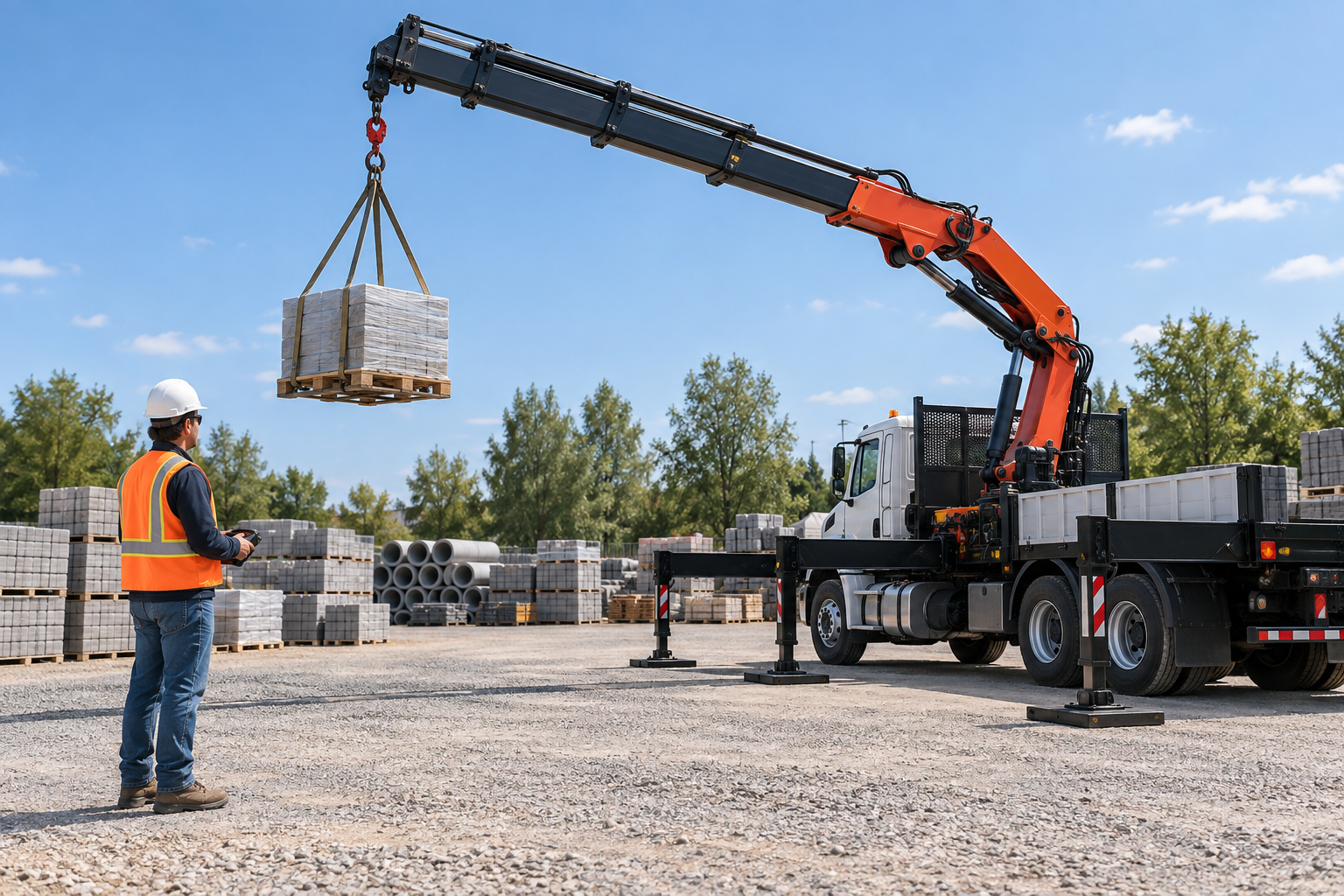
For many applications, wireless remote control can improve operation because the operator can stand in a better position to observe the load and surroundings.
Haoy Advantage
Haoy can offer truck mounted cranes with wireless remote control according to customer requirements. This is especially useful for lifting in construction sites, utility pole installation, municipal work, narrow roads, and areas where the operator needs better visibility.
Remote control is not only a convenience feature. In many working conditions, it can help improve safety and reduce communication problems between workers.
8. Poor Painting and Surface Protection
Surface treatment is often underestimated by buyers. However, poor painting can lead to corrosion, poor appearance, reduced resale value, and shorter service life.
Common painting problems include thin paint layer, poor surface cleaning before painting, rust under paint, uneven coating, paint peeling during shipment, poor protection of hydraulic pipelines, and no special coating for marine or humid environments.
For buyers in coastal areas, tropical climates, rainy regions, mining sites, or marine environments, anti-corrosion performance is especially important.
Haoy Advantage
Haoy supplies not only truck mounted cranes but also marine cranes. This means corrosion protection, hydraulic sealing, and surface durability are important topics in product customization. For marine crane or coastal use, buyers can discuss anti-corrosion coating requirements before production.
For truck mounted cranes used in harsh outdoor environments, suitable painting and protection can be discussed according to the destination market and working condition.
9. Lack of Customization Ability
Many truck mounted crane buyers need customized solutions, not only standard models.
Customization may include knuckle boom or telescopic boom, lifting capacity, boom sections, working radius, installation position, hydraulic outriggers, wireless remote control, color and logo, sub-frame design, special attachments, export packaging, and application-specific configuration.
A supplier with weak customization ability may provide a product that does not fully match the buyer’s application.
Haoy Advantage
Xuzhou Haoyi Engineering Machinery Technology Co., Ltd. accepts OEM and ODM customization for truck mounted cranes, marine cranes, vehicle-mounted aerial work vehicles, and other lifting equipment. Customized orders can start from one unit.
This is a strong advantage for buyers who need one crane for one truck chassis, one marine crane for one vessel deck, one aerial work vehicle for one municipal project, one sample unit before dealer cooperation, or one customized product for a specific application.
A flexible 1-unit MOQ helps international buyers reduce purchasing risk and test the equipment before placing larger orders.
10. Weak Factory Testing Before Delivery
Factory testing is essential before shipping a truck mounted crane. Without proper testing, problems may only appear after the crane arrives in the buyer’s country.
Common testing problems include no load test, no movement test, no outrigger test, no hydraulic pressure check, no remote control test, no slewing test, no leakage inspection, no final inspection record, and no testing video for buyer confirmation.
Buyers should ask the supplier to provide photos or videos of testing before shipment.
Haoy Advantage
For customized crane orders, Haoy can support product confirmation through production communication, configuration checking, and testing before delivery. Buyers should request load testing video, operation video, and detail inspection photos as part of the order confirmation process.
For overseas buyers, this reduces uncertainty and helps verify the crane before shipping.
11. Poor Documentation and Installation Support
A truck mounted crane may require installation drawings, hydraulic diagrams, operation instructions, maintenance guidance, and spare parts lists.
Common documentation problems include no installation drawing, no clear crane dimensions, no hydraulic diagram, no operation manual, no maintenance checklist, no spare parts list, no wiring explanation, and no after-sales contact process.
For international buyers, poor documentation can cause installation delays and additional local labor costs.
Haoy Advantage
Haoy focuses on customized lifting equipment, so communication before and after delivery is important. Buyers can request technical drawings, installation dimensions, and operation guidance according to the project.
This is especially important when the crane is shipped without a truck chassis and installed locally by the buyer or a local workshop.
12. Weak After-Sales Support
After-sales support is a major part of sourcing quality. Even a good crane may need spare parts, maintenance guidance, technical support, or troubleshooting after years of use.
Common after-sales problems include slow supplier response, spare parts difficult to identify, no parts list, no technical support, no hydraulic troubleshooting guidance, no installation support, no operation training materials, and no warranty explanation.
Buyers should evaluate after-sales capability before placing an order, not after a problem happens.
Haoy Advantage
Haoy’s product range includes truck mounted cranes, marine cranes, crawler or spider cranes, vehicle-mounted aerial work vehicles, and customized hydraulic lifting equipment. This product experience can support different customer applications and after-sales communication.
For customized equipment, buyers should keep model information, photos, videos, and parts records. This helps the manufacturer provide faster support when replacement parts or technical guidance are needed.
How to Reduce Quality Risks When Buying a Truck Mounted Crane
Step 1: Confirm Real Working Requirements
Do not start only with price. First confirm maximum load, required working radius, lifting height, application, truck chassis, working environment, control method, and outrigger requirement.
Step 2: Request Technical Information
Ask for the Truck Mounted Crane Load Chart Explained, product specifications, installation dimensions, crane weight, boom structure, hydraulic system configuration, outrigger layout, and optional features.
Step 3: Check Production and Testing Evidence
Ask for factory photos, welding photos, assembly photos, load test video, operation video, outrigger test video, and packing photos before shipment.
Step 4: Confirm Customization Details
Before production, confirm color, logo, control system, boom type, outrigger type, installation position, optional components, shipping method, and documentation.
Step 5: Compare Suppliers Beyond Price
A lower price may hide quality risks. Buyers can also review How to Choose a Truck Mounted Crane before comparing quotations. Buyers should compare suppliers beyond price, including engineering support, product configuration, testing process, chassis matching ability, customization capability, after-sales support, export experience, and communication quality.
Why Choose Haoy for Customized Truck Mounted Cranes?
1. OEM and ODM Customization
Haoy accepts OEM and ODM customization for truck mounted cranes, marine cranes, vehicle-mounted aerial work vehicles, and other lifting equipment.
2. 1 Unit MOQ for Customized Equipment
For customized truck mounted cranes, marine cranes, and aerial work vehicles, Haoy can support orders from one unit. This is practical for end users, contractors, dealers, and overseas buyers who want to start with a sample or project-based order.
3. Multiple Product Categories
Haoy’s product range covers truck mounted crane, knuckle boom crane, telescopic boom crane, mini truck crane, marine crane, spider crane, grab crane, and vehicle-mounted aerial work vehicle. This helps buyers choose suitable equipment for different lifting applications.
4. Application-Based Recommendation
Haoy can recommend crane configurations according to real working conditions, such as construction material handling, utility pole installation, municipal maintenance, logistics loading, marine deck lifting, narrow road operation, and aerial work.
5. Flexible Configuration
Buyers can discuss lifting capacity, boom type, working radius, control method, outrigger design, color, logo, hydraulic system, and installation requirements before production.
FAQ About Truck Mounted Crane Quality Problems
What is the most common quality problem when sourcing a truck mounted crane?
Common problems include poor welding, hydraulic leakage, inaccurate load capacity, unstable outriggers, weak chassis matching, and lack of testing before delivery.
Why is the load chart important?
A load chart shows how much the crane can safely lift at different working radii. Buyers should not judge crane performance only by rated capacity.
Can a truck mounted crane be installed on any truck?
No. The truck chassis must be checked before installation. Frame strength, wheelbase, axle load, PTO, and installation space are important.
Does Haoy accept customized truck mounted crane orders?
Yes. Xuzhou Haoyi Engineering Machinery Technology Co., Ltd. accepts OEM and ODM customization for truck mounted cranes, marine cranes, vehicle-mounted aerial work vehicles, and other lifting equipment.
What is Haoy’s MOQ for customized equipment?
For customized truck mounted cranes, marine cranes, and vehicle-mounted aerial work vehicles, Haoy can accept orders from one unit.
Is wireless remote control necessary?
It depends on the application. Wireless remote control is useful when the operator needs better visibility and safer positioning during lifting.
What should buyers check before shipment?
Buyers should request load test videos, operation videos, outrigger testing, hydraulic leakage inspection, final product photos, and packing photos.
Conclusion
Sourcing a truck mounted crane requires more than comparing price and rated capacity. Many quality problems come from poor boom structure, weak welding, hydraulic leakage, unstable outriggers, incorrect chassis matching, unclear load charts, poor painting, lack of testing, and weak after-sales support.
For international buyers, the best way to reduce risk is to work with a manufacturer that understands customization, truck chassis matching, load testing, hydraulic systems, and real application requirements.
Haoy, from Xuzhou Haoyi Engineering Machinery Technology Co., Ltd., supports OEM and ODM customization for truck mounted cranes, marine cranes, vehicle-mounted aerial work vehicles, and other lifting equipment. With customized orders starting from one unit, Haoy helps overseas buyers purchase equipment that matches their actual project needs, instead of forcing them into large batch orders or unsuitable standard models.
Before sourcing a truck mounted crane, buyers should prepare detailed information about lifting capacity, working radius, truck chassis, application, control method, outrigger requirements, and destination country. With this information, Haoy can help recommend a practical configuration and reduce common quality risks from the beginning. Review the Truck Mounted Crane Quotation Checklist before requesting a quotation.