
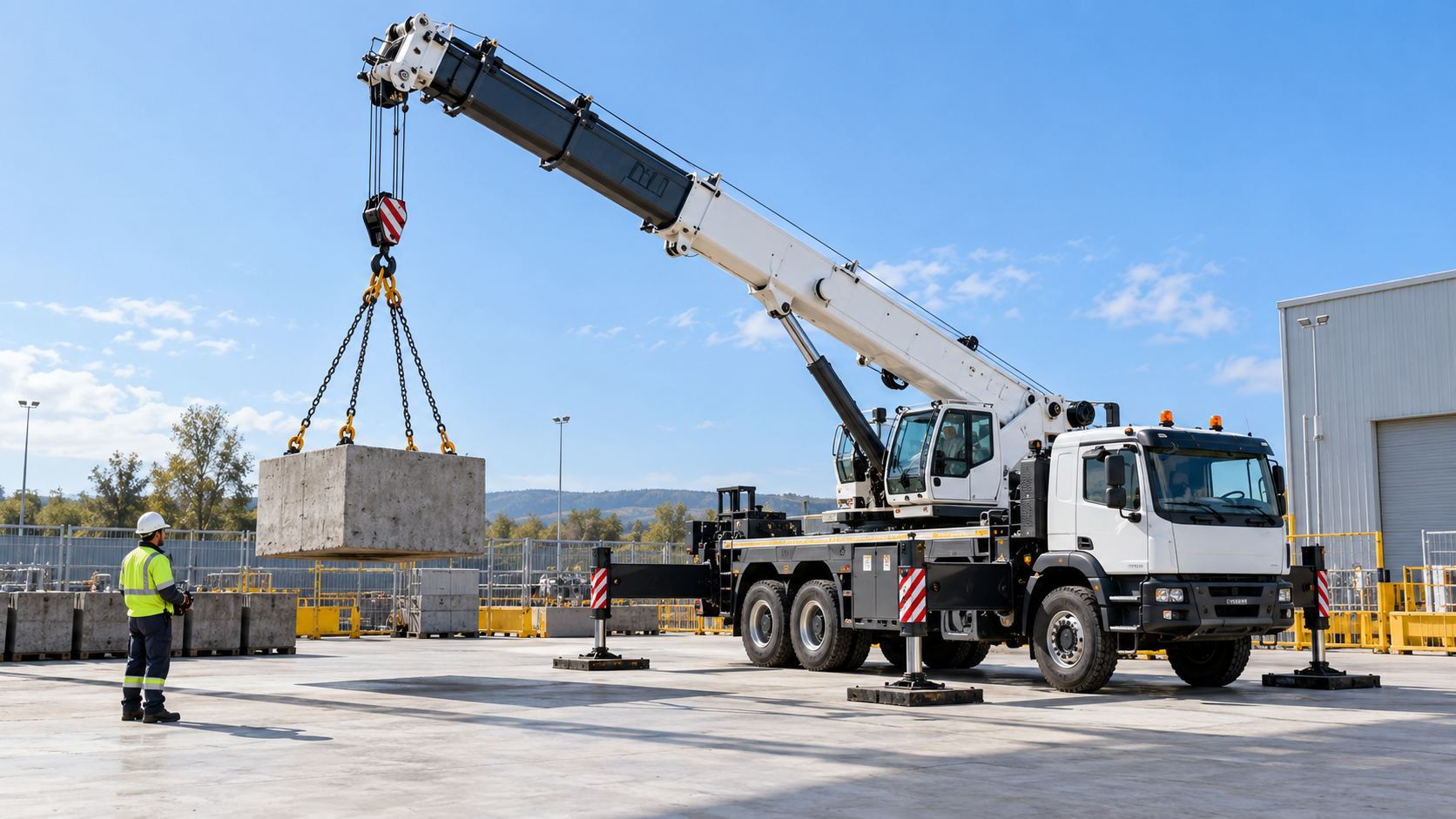
A truck mounted crane load test is one of the most important inspection steps before delivery. It helps buyers verify safe operation, the agreed configuration, and the quality of the hydraulic and structural systems.
Before shipment, buyers should check the test load, working radius, boom movement, outriggers, hydraulic leakage, slewing, remote control, emergency stop, stability, and supporting records.
1. Why Is a Truck Mounted Crane Load Test Important?
A load test confirms that a customized crane performs safely under controlled lifting conditions. It should reflect the ordered capacity, boom type, working radius, control method, outrigger design, and truck chassis.
- Confirm the tested load and rated capacity.
- Check smooth boom and slewing movement.
- Verify hydraulic pressure and leakage control.
- Confirm stable outriggers and truck level.
- Check remote control and emergency stop response.
- Make sure the tested machine matches the order.
Ask for clear load-test photos or video before final shipment approval.
2. Confirm the Test Load and Working Radius
A small load lifted at a short radius does not prove the crane can perform the buyer’s real work. Ask for the test-load weight, working radius, boom length, and rated capacity at that radius. For example, a test at 3 meters does not prove a requirement of 2 tons at 8 meters.
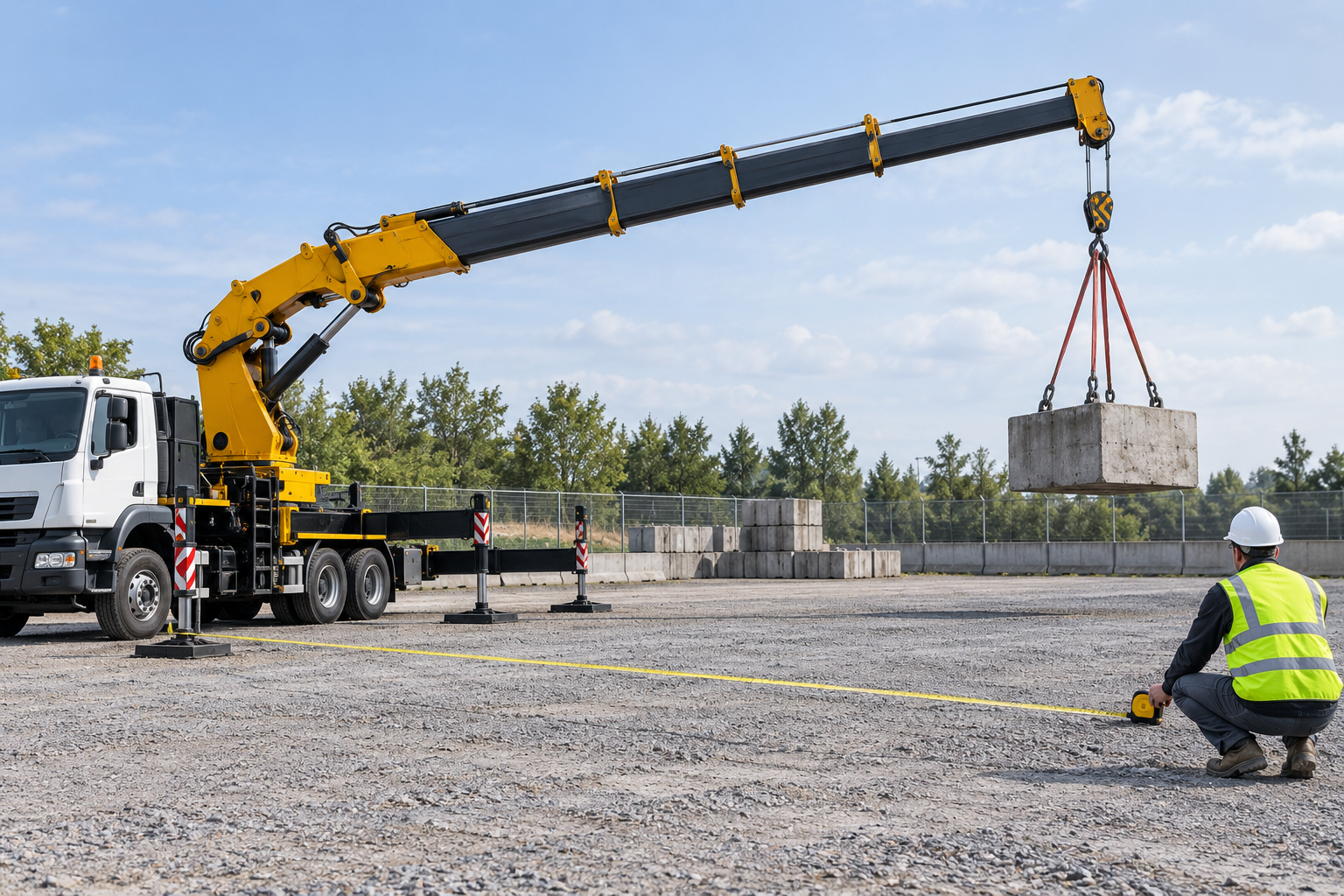
Use the manufacturer’s load chart to compare the test condition with the real application.
3. Check Boom Lifting and Lowering Movement
The boom should lift and lower smoothly, steadily, and in line with the control input. There should be no sudden dropping, abnormal shaking, unusual noise, or delayed response. After stopping, the boom should hold the load without slowly drifting down.
Uneven motion or drift can indicate hydraulic pressure, cylinder, valve, sealing, or structural problems.
4. Check Telescopic or Folding Boom Operation
For a telescopic boom, check extension, retraction, alignment, smooth telescoping, and freedom from jamming. For a knuckle boom, check folding, unfolding, joint stability, cylinder response, and compact storage. Every section should move evenly throughout the test.
See our guide to telescopic boom settings, outriggers, angle, and stability for related checks.
5. Check Slewing System Performance
Test rotation with and without load. Observe smooth rotation, accurate stopping, stable speed, low noise, limited load swing, and a stable crane base. Poor performance may relate to the slewing bearing, hydraulic motor, gearbox, valve, installation base, or lubrication.
6. Check Hydraulic Outrigger Stability
Outriggers must extend and retract smoothly, hold pressure, keep the truck level, and maintain firm ground contact. Confirm the beam span, pads, cylinder seals, and absence of leakage. For more safety guidance, see key safety features of a truck mounted crane.
7. Check Hydraulic Leakage
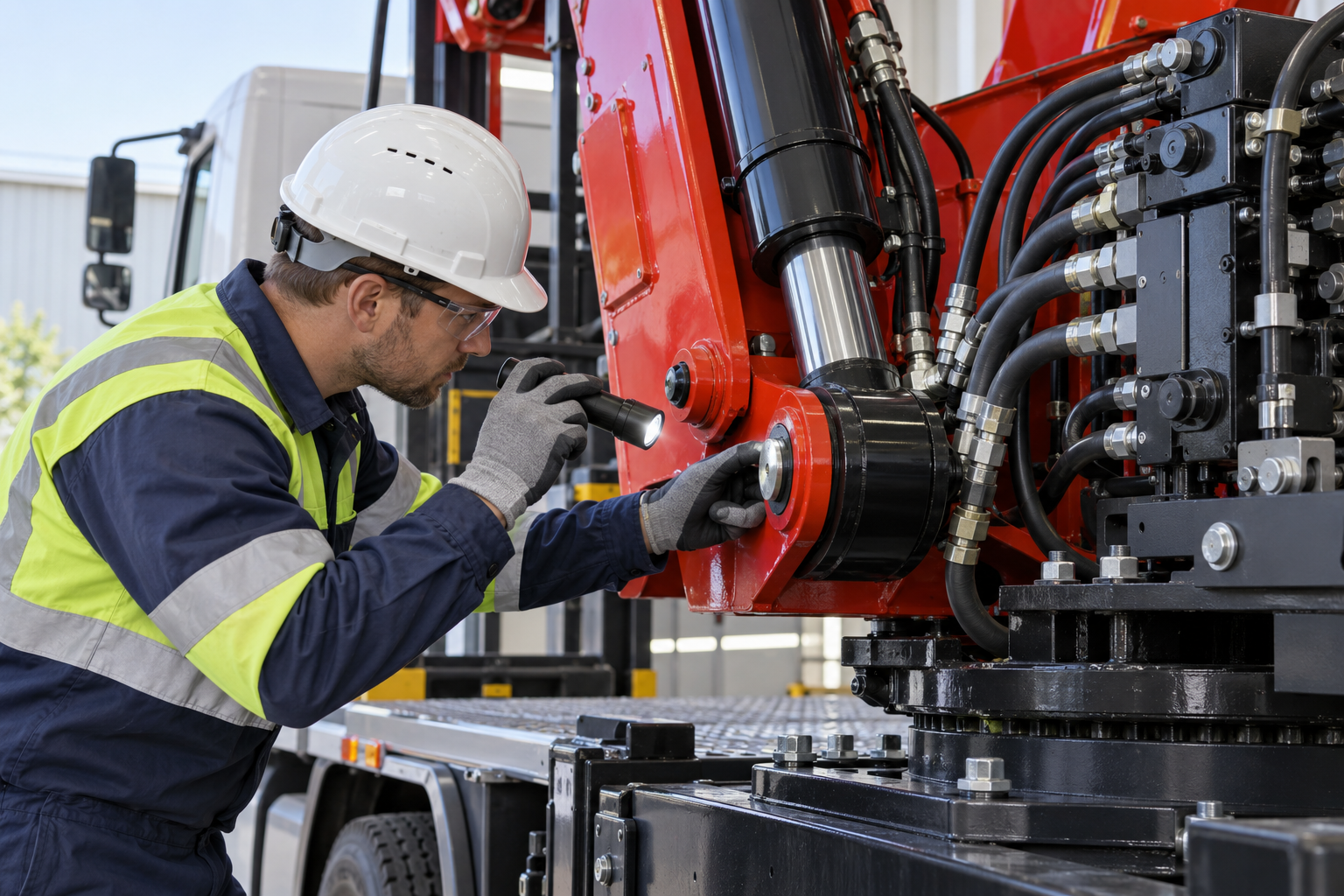
Inspect boom cylinders, extension cylinders, outrigger cylinders, hoses, fittings, valves, pipelines, the oil tank, and the hydraulic pump. Even a small leak can become a larger failure after transport or field operation.
8. Check Wireless Remote Control Response
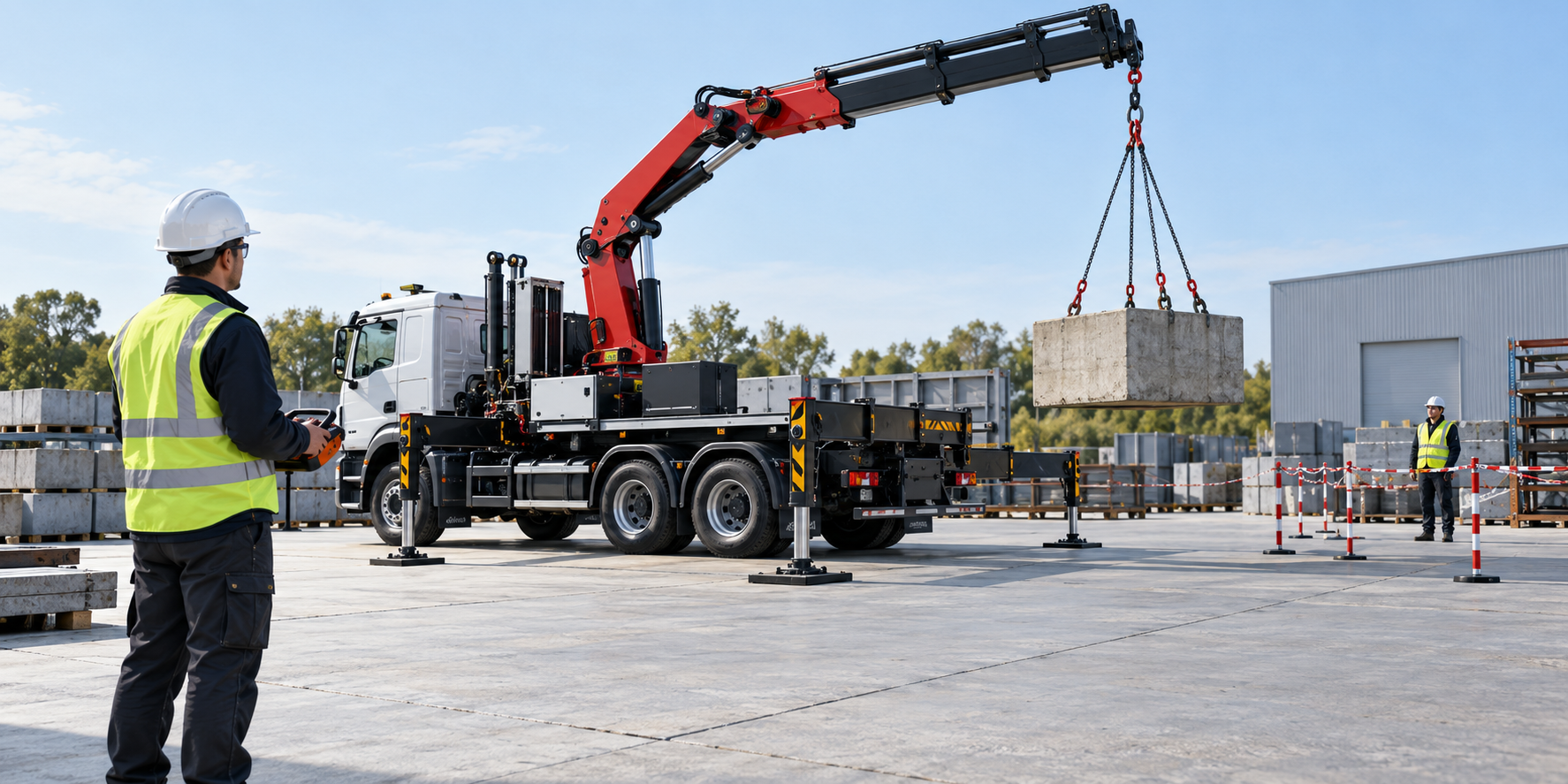
Test every remote function: lift, lower, extend, fold, slew, outriggers, speed control, signal stability, battery status, range, and emergency stop. If manual and wireless controls are both supplied, test both.
9. Check the Emergency Stop Function
Activate the emergency stop from the wireless remote, manual station, and electrical control box where applicable. Movement should stop promptly and restart only after the correct reset procedure.
10. Check Crane Stability During the Test
Watch for excessive truck-frame twisting, sinking or movement of outriggers, excessive load swing, base shaking, boom vibration, uneven support, or sudden movement. Stability depends on crane design, chassis matching, sub-frame, outrigger layout, working radius, and ground condition. Read more about truck and crane chassis matching.
11. Confirm the Tested Crane Matches the Ordered Configuration
| Item | What to confirm |
|---|---|
| Crane model | Matches the quotation and order |
| Rated capacity | Matches the agreed load chart |
| Boom type and sections | Correct telescopic or knuckle configuration |
| Outriggers | Correct type, span, and layout |
| Control method | Manual, hydraulic, or wireless remote as ordered |
| Accessories | Winch, oil cooler, remote, and other options included |
| Documents | Manual, load chart, packing list, and spare-parts list |
Small configuration differences can affect installation, operation, and final acceptance.
12. What Should a Good Load-Test Video Include?
Request a continuous video showing the full crane, test load, working radius, outriggers, boom lifting and lowering, extension or folding, slewing, remote operation, emergency stop, hydraulic inspection, and final product details. A short clip of lifting alone is not enough.
13. Common Problems Found During Load Testing
Load testing may reveal oil leakage, weak lifting force, slow boom movement, unstable slewing, remote-control delay, outrigger pressure loss, abnormal hydraulic noise, boom shaking, loose bolts or pins, paint damage, wrong configuration, or missing accessories. A reliable supplier should correct issues before delivery.
See common quality problems when sourcing a truck mounted crane for a broader pre-shipment checklist.
14. What Buyers Should Request Before Shipment
- Load-test video and photos
- Boom, slewing, outrigger, remote, and hydraulic test records
- Load chart and operating manual
- Nameplate and product-detail photos
- Packing photos and spare-parts list
- Final inspection confirmation
For customized equipment, also confirm installation dimensions and chassis-matching information.
15. How HAOY Supports Pre-Delivery Load Testing
HAOY can support project-based configuration and pre-shipment confirmation for customized truck mounted cranes. Buyers can provide lifting capacity, working radius, chassis information, installation position, control method, and application scenario. Before delivery, request operation videos, load-test confirmation, hydraulic inspection, outrigger testing, and product-detail photos.
FAQ About Truck Mounted Crane Load Testing
What is a truck mounted crane load test?
It is an inspection process used to confirm lifting performance, boom movement, hydraulics, outriggers, slewing, and stability before delivery.
Does a load test prove maximum capacity at every radius?
No. It proves performance only under the tested condition. Always check the load chart for other working radii.
Should suppliers provide a load chart?
Yes. The load chart shows safe lifting capacity at different working radii and boom positions.
Is hydraulic leakage acceptable after a test?
No visible leakage should be accepted. Any leak should be inspected and corrected before shipment.
Should remote control be tested?
Yes. Test all major functions and the emergency stop before delivery.
Conclusion
A truck mounted crane load test is a critical pre-delivery quality-control step. Buyers should verify the tested load, working radius, boom movements, hydraulic condition, outriggers, slewing, remote control, emergency stop, stability, and configuration. A complete test video and supporting documents reduce delivery risk and help buyers make a confident purchasing decision.