
A truck mounted crane is a valuable lifting machine that combines the mobility of a truck with the lifting ability of a hydraulic crane. It is widely used in construction material handling, utility pole installation, logistics loading, municipal maintenance, farm lifting, roadside rescue, and many other applications. For buyers and operators, the purchase price is only one part of the total cost. Long-term maintenance cost is also very important.
To reduce maintenance costs for truck mounted cranes, buyers and operators should focus on proper crane selection, correct chassis matching, daily inspection, hydraulic system maintenance, regular lubrication, safe operation, timely replacement of wear parts, operator training, and preventive maintenance planning. Most expensive failures do not happen suddenly. They often begin with small problems such as oil leakage, loose bolts, poor lubrication, overload operation, damaged hoses, or ignored inspection warnings.
A well-maintained truck mounted crane can work more safely, reduce downtime, extend component life, and lower long-term operating costs. This article explains practical ways to reduce maintenance costs and improve the service life of truck mounted cranes.
1. Choose the Right Crane Before Purchase
Maintenance cost starts before the crane is delivered. If the crane is not suitable for the actual application, maintenance problems may appear early.
For example, if a buyer chooses a crane only by price or rated capacity, the crane may not match the real working radius, load weight, truck chassis, or working environment. This can cause frequent overload, poor stability, hydraulic stress, structural fatigue, and higher repair costs.
Before buying a truck mounted crane, buyers should confirm:
| Information | Why It Matters |
|---|---|
| Maximum load | Helps select the correct lifting capacity |
| Working radius | Determines actual lifting performance |
| Truck chassis model | Affects installation and stability |
| Installation space | Determines mounting position and layout |
| Working environment | Affects configuration and protection needs |
| Control method | Affects operation safety and efficiency |
| Outrigger requirement | Affects stability and chassis stress |
Choosing the right crane from the beginning is one of the best ways to reduce future maintenance costs.
2. Match the Crane with the Truck Chassis Correctly
A truck mounted crane must work together with the truck chassis. Poor chassis matching can increase maintenance costs, even if the crane itself is well made.
Common chassis matching problems include:
- Weak truck frame
- Insufficient wheelbase
- Poor axle load distribution
- Limited installation space
- Incorrect sub-frame design
- PTO incompatibility
- Poor outrigger layout
- Excessive vibration during operation
If the chassis is not suitable, the crane may cause frame deformation, unstable lifting, uneven stress, and repeated structural problems.
To reduce maintenance risks, buyers should provide the supplier with truck brand, model, wheelbase, frame width, frame thickness, axle configuration, available installation space, and PTO information before confirming the crane model.
3. Follow the Load Chart and Avoid Overloading
Overloading is one of the fastest ways to increase maintenance costs. Many buyers know the rated capacity of their crane but ignore the load chart.
A truck mounted crane marked as 8 tons does not mean it can lift 8 tons at every working radius. As the boom extends and the working radius increases, the safe lifting capacity decreases.
Overloading can damage:
- Boom sections
- Hydraulic cylinders
- Slewing system
- Crane base
- Outriggers
- Sub-frame
- Truck chassis
- Hydraulic valves and hoses
To reduce maintenance cost, operators should always check the load chart before lifting. They should confirm both the load weight and the working radius. If the load condition is uncertain, operators should stop and confirm before operation.
Preventing overload is much cheaper than repairing a damaged boom or hydraulic system.
4. Inspect the Hydraulic System Regularly
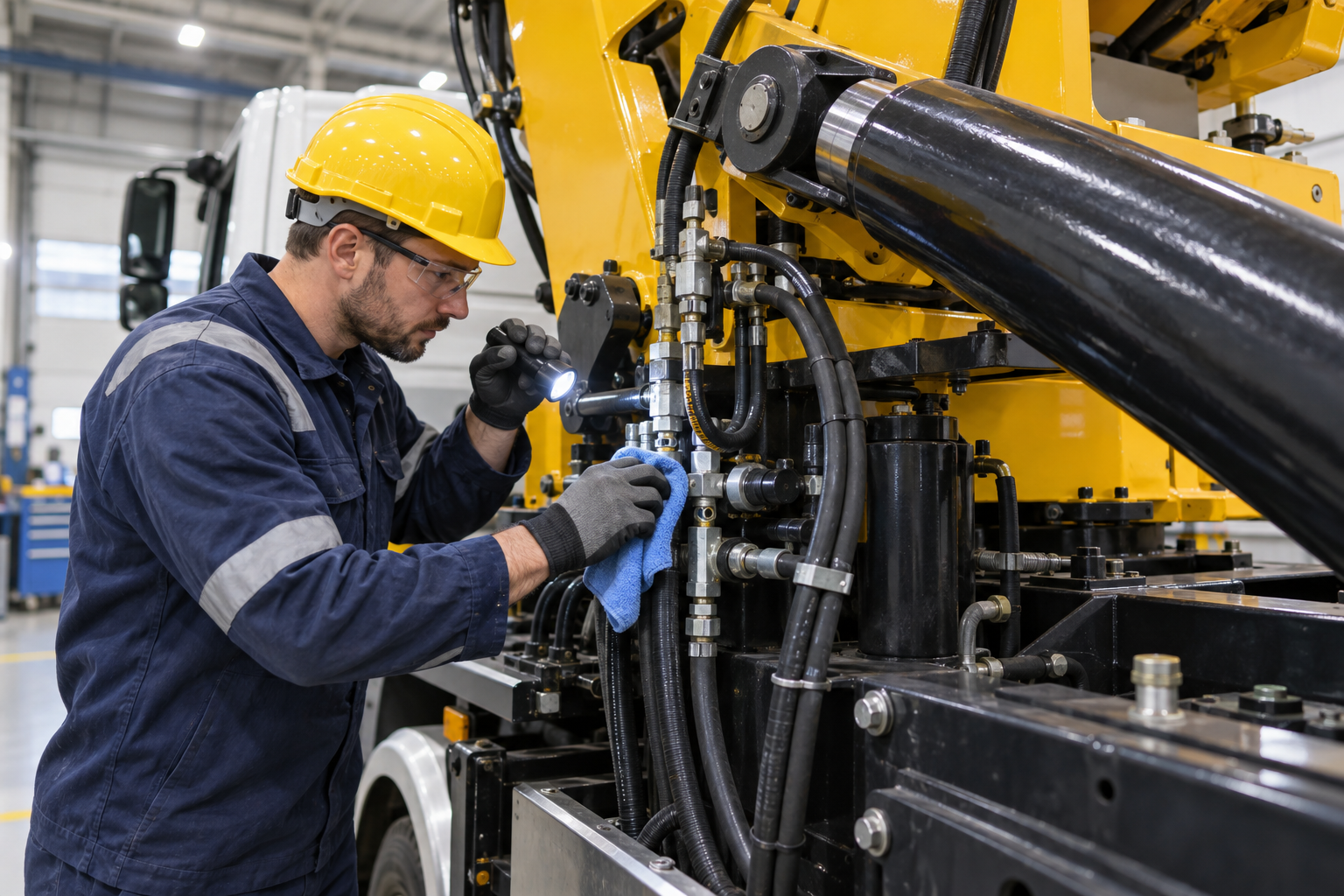
The hydraulic system is one of the most important and maintenance-sensitive parts of a truck mounted crane. It controls lifting, lowering, extending, slewing, folding, and outrigger movement.
Common hydraulic problems include:
- Oil leakage
- Slow movement
- Weak lifting force
- Cylinder drifting
- High oil temperature
- Valve blockage
- Hose aging
- Contaminated hydraulic oil
- Poor sealing
Regular hydraulic inspection can prevent small problems from becoming expensive repairs.
Operators should check hydraulic oil level, hydraulic oil cleanliness, hose surface condition, fittings and joints, cylinder seals, valve response, abnormal noise, oil temperature, and leakage points.
Hydraulic oil should be replaced according to the maintenance schedule and working environment. Dirty oil can damage pumps, valves, cylinders, and seals. In dusty, hot, or high-frequency working conditions, hydraulic maintenance should be more frequent.
5. Keep the Crane Properly Lubricated
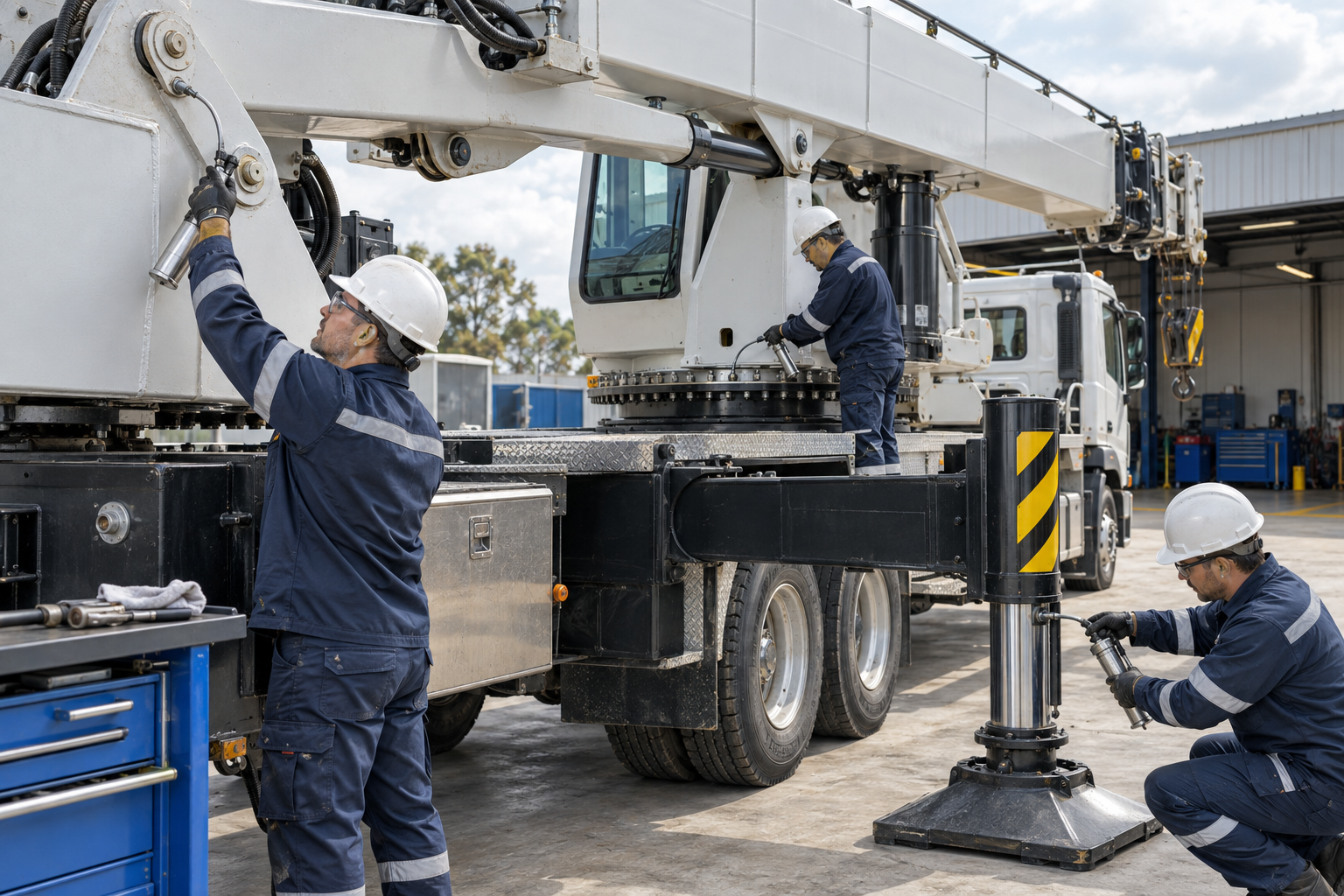
Lubrication is a simple but very effective way to reduce maintenance costs. Many truck mounted crane failures are related to poor lubrication.
Key lubrication points may include:
- Boom pins
- Folding joints
- Slewing bearing
- Outrigger sliding parts
- Cylinder pins
- Hook block components
- Winch parts if equipped
- Rotation system
- Mechanical connection points
Poor lubrication can cause abnormal wear, noise, friction, overheating, and shortened component life. Once pins, bushings, or slewing components are badly worn, repair costs can be high.
Operators should follow the manufacturer’s lubrication schedule and use suitable grease. In rainy, dusty, or coastal environments, lubrication intervals may need to be shortened.
6. Check Outriggers Before Every Operation
Outriggers are essential for crane stability. If the outrigger system is not maintained, the crane may become unsafe and expensive to repair.
Common outrigger problems include:
- Hydraulic cylinder leakage
- Bent outrigger beams
- Damaged outrigger pads
- Poor extension or retraction
- Loose pins or bolts
- Ground sinking during lifting
- Uneven support
- Lack of lubrication
Before operation, operators should check whether the outriggers can extend and retract smoothly. They should also check the ground condition and use outrigger pads when necessary.
Using the crane without proper outrigger deployment can overload the truck frame, sub-frame, and crane base. This may cause long-term structural damage.
7. Train Operators Properly
Operator behavior has a direct effect on maintenance cost. Even a high-quality truck mounted crane can fail early if it is operated incorrectly.
Poor operation habits include:
- Overloading
- Sudden start and stop
- Fast movement under heavy load
- Lifting without full outrigger support
- Dragging loads sideways
- Ignoring abnormal noise
- Operating on unstable ground
- Using the crane without daily inspection
- Continuing operation with oil leakage
- Ignoring the load chart
Proper operator training can reduce wear, prevent accidents, and extend crane service life.
Operators should understand load chart reading, safe working radius, outrigger operation, hydraulic control method, emergency stop use, daily inspection points, warning signs of failure, and basic maintenance requirements.
Training is a low-cost investment that can prevent high-cost damage.
8. Use Wireless Remote Control Correctly
Wireless remote control can improve visibility and operation safety, but it must be used correctly and maintained properly.
A remote control system helps the operator stand in a better position to observe the load, boom, truck, outriggers, and surrounding area. This can reduce accidental collision, misoperation, and unsafe lifting.
To reduce remote control-related maintenance problems, operators should:
- Check battery condition
- Test emergency stop before operation
- Keep the transmitter dry and clean
- Avoid dropping the remote control
- Check signal response
- Store the remote control properly
- Stop operation if control response is abnormal
If the crane uses both manual control and remote control, both systems should be tested regularly.
9. Replace Wear Parts Before Failure
Preventive replacement is usually cheaper than emergency repair. Some parts are designed to wear over time and should be inspected regularly.
Common wear parts include:
- Hydraulic hoses
- Seals
- Filters
- Pins
- Bushings
- Bolts
- Hook safety latch
- Wire rope if equipped
- Oil filters
- Remote control batteries
- Rubber pads
- Electrical connectors
If these parts are ignored, they may cause larger failures. For example, a damaged hydraulic hose may cause oil leakage, pressure loss, downtime, and safety risk. A worn pin or bushing may cause boom looseness and structural wear.
Buyers should keep a basic spare parts package, especially for overseas use where delivery time may be longer.
10. Protect the Crane from Corrosion
Truck mounted cranes often work outdoors. Rain, mud, dust, sunlight, snow, salt, and chemicals can all affect the crane’s service life.
Corrosion can damage:
- Boom surface
- Crane base
- Outriggers
- Hydraulic fittings
- Fasteners
- Electrical connectors
- Pins and joints
- Paint coating
To reduce corrosion-related maintenance cost, clean the crane regularly, repair paint damage quickly, keep hydraulic fittings protected, lubricate exposed joints, avoid long-term storage in wet conditions, wash the crane after coastal or muddy operation, and apply suitable anti-rust protection when needed.
For cranes used in coastal, marine, mining, or humid environments, corrosion protection should be discussed before ordering.
11. Schedule Preventive Maintenance
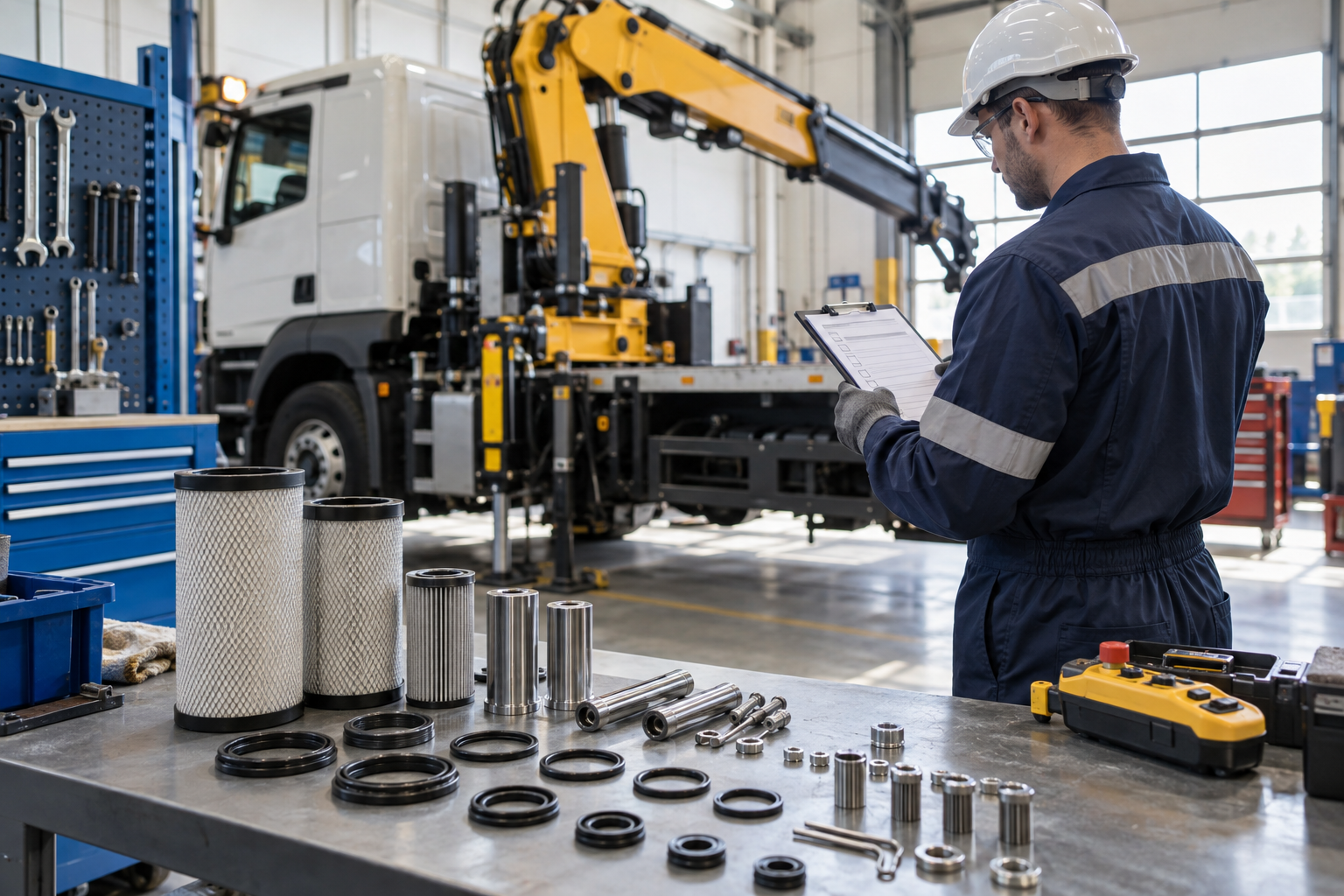
Preventive maintenance is more cost-effective than repairing after failure. A simple maintenance plan can help operators control cost and reduce downtime.
A practical maintenance schedule may include:
| Frequency | Maintenance Task |
|---|---|
| Daily | Check oil leakage, bolts, hooks, outriggers, remote control, and load chart |
| Weekly | Check lubrication points, hydraulic hoses, pins, and warning labels |
| Monthly | Check hydraulic oil condition, slewing system, boom joints, and structural parts |
| Every 3–6 months | Inspect filters, cylinders, seals, electrical connectors, and mounting bolts |
| Annually | Conduct full inspection, load test, structural check, and major maintenance review |
The actual schedule should be adjusted according to working frequency, environment, crane model, and manufacturer recommendations.
12. Keep Maintenance Records
Maintenance records help reduce long-term costs because they allow operators and suppliers to track crane condition.
A maintenance record should include:
- Inspection date
- Operating hours
- Fault description
- Replaced parts
- Hydraulic oil replacement
- Lubrication record
- Repair photos
- Testing results
- Operator notes
- Supplier support record
For fleet owners and dealers, maintenance records are especially useful. They help identify repeated problems, plan spare parts, improve operator training, and support warranty communication.
When a problem occurs, clear records also help the manufacturer provide faster technical support.
13. Avoid Low-Quality Spare Parts
Using low-quality spare parts may reduce short-term cost but increase long-term risk.
For example, low-quality hydraulic hoses may leak early. Poor seals may fail quickly. Incorrect filters may allow contamination. Weak pins or bolts may create structural risks.
Buyers should use suitable parts recommended by the supplier or parts that meet the required specification. For safety-related components, quality should not be compromised.
A spare parts list should be prepared at the time of purchase. This helps buyers know what to stock and how to identify replacement parts later.
14. Work with a Supplier That Provides Technical Support
Supplier support can greatly affect maintenance cost. A reliable supplier should provide technical documents, operation guidance, maintenance advice, spare parts support, and troubleshooting assistance.
Before buying a truck mounted crane, buyers should ask:
- Can you provide an operation manual?
- Can you provide a maintenance guide?
- Can you provide a spare parts list?
- Can you identify parts from photos?
- Can you provide hydraulic troubleshooting support?
- Can you provide remote installation guidance?
- Can you provide load testing before delivery?
- Can you recommend a spare parts package?
For international buyers, after-sales support is especially important because local service resources may be limited.
HAOY supports customized truck mounted crane solutions and can discuss maintenance-related requirements, spare parts, hydraulic configuration, control method, and operation support before production. For buyers who need one crane for one truck chassis or project, early technical communication can help reduce later maintenance risk.
15. Reduce Maintenance Costs Through Better Daily Management
Many maintenance costs can be reduced through simple daily management. Operators should not wait until the crane fails.
Good daily management includes:
- Assigning trained operators
- Keeping the crane clean
- Checking hydraulic oil regularly
- Lubricating moving parts
- Avoiding overload
- Using outriggers correctly
- Recording problems early
- Replacing wear parts on time
- Storing the crane properly
- Reporting abnormal noise or movement
- Following the manufacturer’s instructions
Small habits can make a large difference in long-term cost.
FAQ About Reducing Truck Mounted Crane Maintenance Costs
What is the most common cause of high maintenance cost?
Common causes include overloading, poor lubrication, hydraulic oil contamination, ignored oil leakage, incorrect operation, and delayed replacement of wear parts.
How often should a truck mounted crane be inspected?
A basic inspection should be done before each operation. More detailed maintenance should be scheduled weekly, monthly, and annually according to use frequency and working environment.
Why is hydraulic system maintenance important?
The hydraulic system controls most crane movements. Poor hydraulic maintenance can cause leakage, weak lifting force, slow movement, overheating, and component failure.
Can operator training reduce maintenance costs?
Yes. Properly trained operators are less likely to overload the crane, misuse the controls, ignore warning signs, or damage components through poor operation habits.
What spare parts should buyers prepare?
Common spare parts include hydraulic hoses, seals, filters, pins, bushings, remote control batteries, electrical connectors, and other wear parts recommended by the supplier.
How can buyers reduce maintenance costs before purchasing?
Buyers should choose the correct crane model, confirm chassis matching, check the load chart, discuss working conditions, request testing before delivery, and prepare a spare parts plan.
Conclusion
Reducing maintenance costs for truck mounted cranes requires more than repairing problems after they happen. The most effective strategy is preventive management. Buyers should start by choosing the correct crane, matching it with the right truck chassis, following the load chart, maintaining the hydraulic system, lubricating key parts, checking outriggers, training operators, and replacing wear parts before failure.
Daily inspection, proper operation, and scheduled maintenance can significantly reduce downtime and extend the service life of the crane. For overseas buyers, it is also important to work with a supplier that can provide technical documents, spare parts support, load testing, and remote guidance.
A truck mounted crane is a long-term working asset. When buyers manage maintenance properly, they can reduce repair costs, improve safety, and get better value from the equipment throughout its service life.