
The hydraulic system is the power center of a truck mounted crane. It controls lifting, lowering, slewing, boom extension, folding, outrigger movement, and sometimes winch operation. When the hydraulic system works properly, the crane moves smoothly and safely. When it fails, the crane may become slow, weak, unstable, noisy, or even unsafe to operate.
Common hydraulic problems in truck mounted cranes include oil leakage, weak lifting force, slow movement, overheating, cylinder drift, hose aging, contaminated hydraulic oil, valve blockage, pump wear, abnormal noise, and unstable remote-control response. Most of these problems can be reduced through correct crane selection, proper operation, regular inspection, clean hydraulic oil, timely replacement of wear parts, and reliable supplier support.
For buyers, dealers, and end users, understanding these hydraulic problems is important before purchasing and during daily use. A truck mounted crane is not only a steel structure mounted on a truck. It is a complete hydraulic lifting system that must match the truck chassis, working radius, load weight, control method, and real jobsite environment.
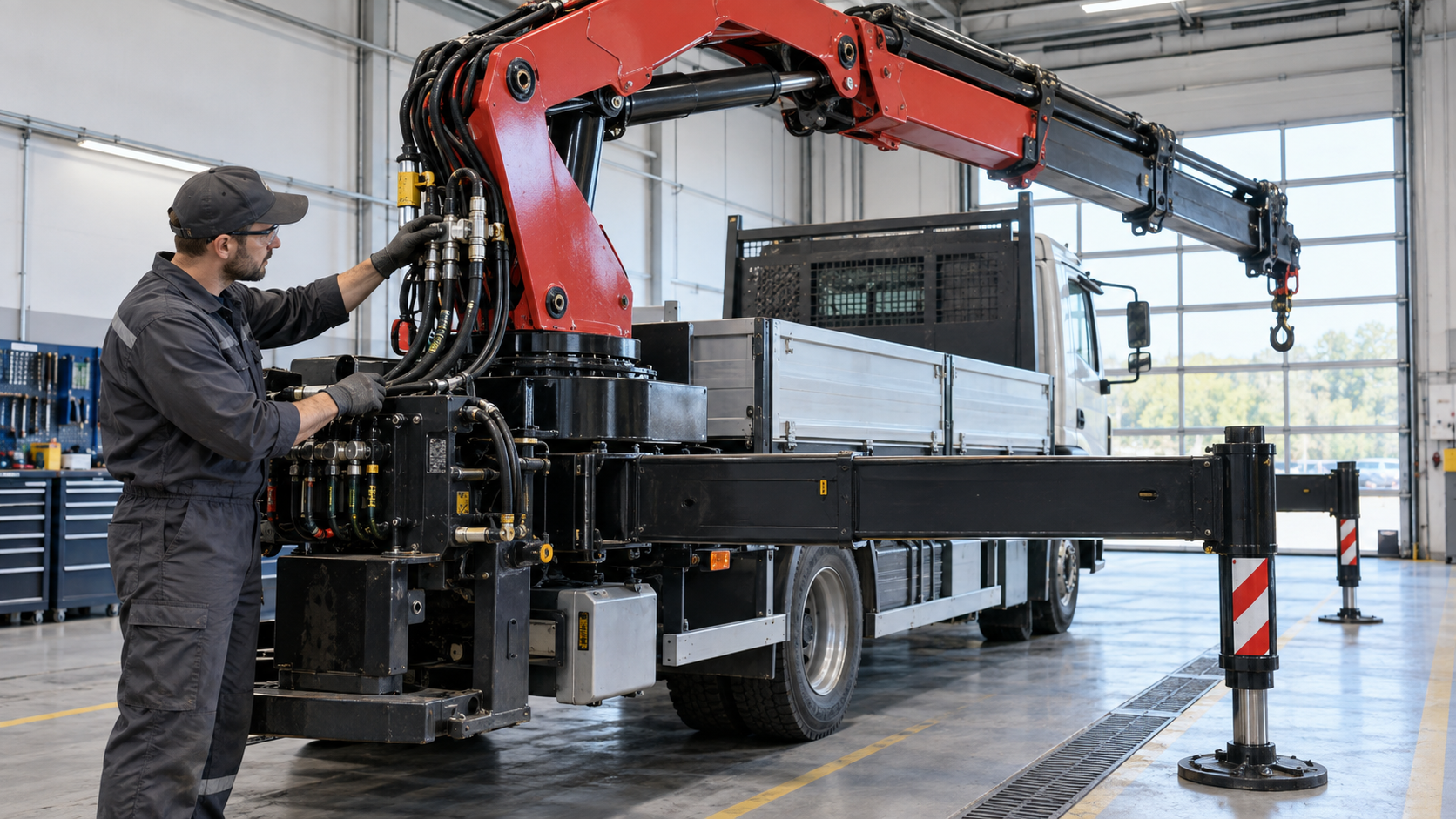
1. Hydraulic Oil Leakage
Oil leakage is one of the most common hydraulic problems in truck mounted cranes. It may appear around hose fittings, cylinders, valves, pumps, oil tanks, or pipe connections. Small leakage may seem harmless at first, but it can lead to pressure loss, weak movement, dirty components, safety risks, and environmental problems.
Typical causes of oil leakage include worn seals, loose joints, damaged hoses, poor fitting quality, incorrect installation, excessive pressure, vibration, and aging rubber parts. In hot, dusty, or high-frequency working environments, seals and hoses may wear faster than expected.
Operators should not ignore small leakage. A small oil mark can become a larger failure if the crane continues to work under pressure. Daily inspection should include checking the ground, cylinder surface, hose joints, valve block, and hydraulic tank area.
How to reduce oil leakage
Use qualified hydraulic hoses and fittings. Keep hose routing smooth and avoid sharp bending. Tighten fittings correctly without over-tightening. Replace worn seals on time. Keep the hydraulic system clean during maintenance. If the crane is exported overseas, buyers should prepare basic spare seals and hoses to reduce downtime.
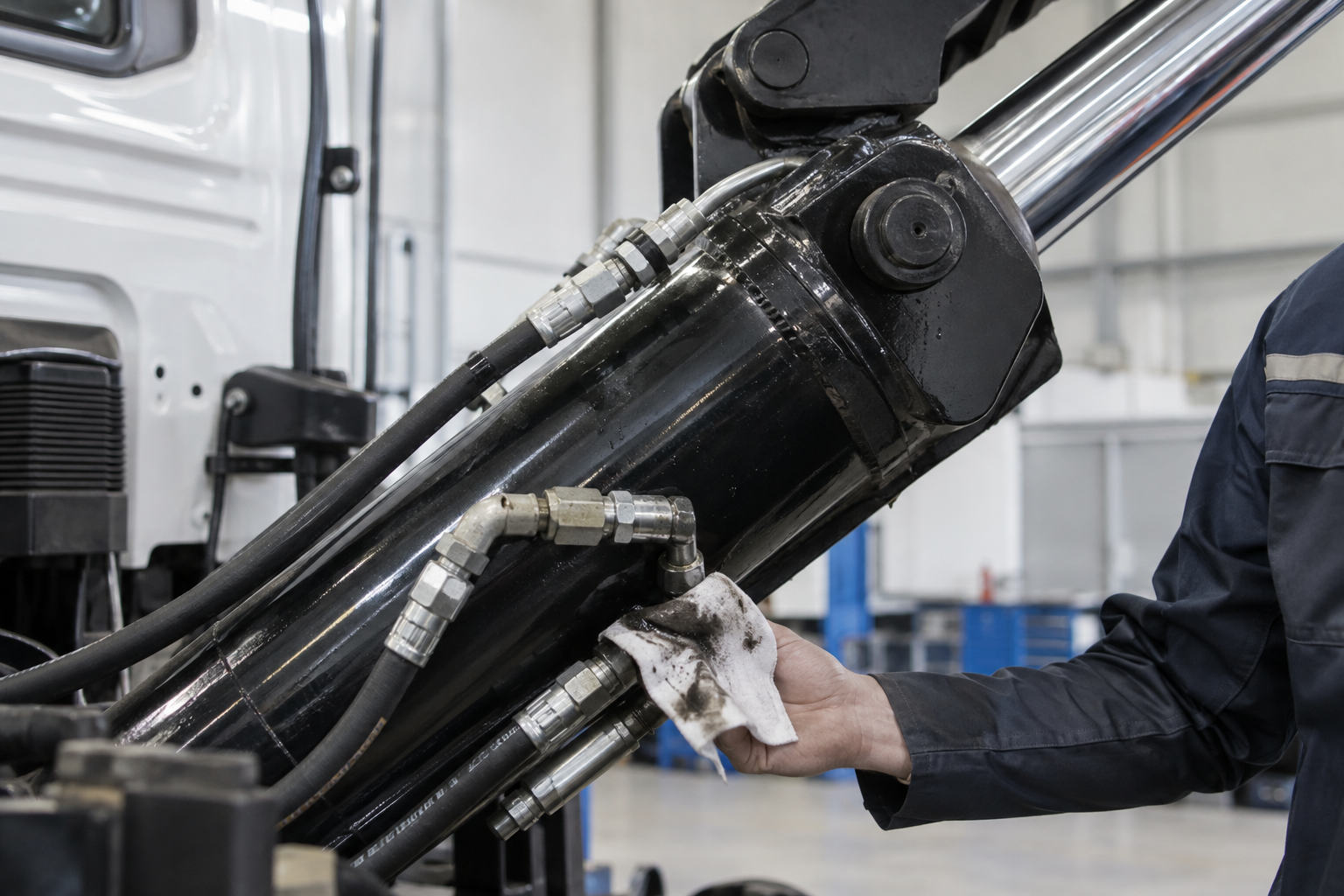
2. Weak Lifting Force
Weak lifting force means the crane cannot lift the expected load or the boom rises slowly under load. This problem may be caused by insufficient hydraulic pressure, pump wear, valve leakage, cylinder internal leakage, low oil level, contaminated oil, or overload operation.
Sometimes buyers misunderstand the problem. A crane may seem weak because the operator expects it to lift maximum capacity at a long working radius. In reality, lifting capacity decreases as the working radius increases. Therefore, operators should first check the load chart before assuming the hydraulic system is faulty.
If the load is within the safe working range but the crane still cannot lift properly, the hydraulic pressure, oil level, pump, control valve, and cylinder sealing should be checked.
3. Slow Boom Movement
Slow boom movement can affect work efficiency and may indicate a hydraulic issue. The boom may lift slowly, extend slowly, fold slowly, or rotate slowly. This can be caused by low hydraulic flow, blocked filters, worn pumps, valve problems, low engine speed, contaminated oil, or incorrect control adjustment.
Slow movement does not always mean the crane is defective. Some cranes are designed for precise and stable control rather than high-speed movement. However, if movement becomes slower than normal, inspection is necessary.
Buyers should ask suppliers about normal operating speed, recommended engine speed, hydraulic flow requirements, and maintenance intervals. Operators should also check whether the truck PTO and hydraulic pump are working correctly. Correct chassis and PTO matching helps avoid hydraulic performance problems.
4. Hydraulic Oil Overheating
Hydraulic oil overheating is a serious problem because high temperature reduces oil viscosity, damages seals, accelerates component wear, and shortens hydraulic system life. If the crane is used continuously under heavy load, in hot weather, or with poor oil circulation, the oil temperature may rise quickly.
Common causes include continuous high-load operation, insufficient oil volume, wrong oil grade, blocked filters, poor heat dissipation, internal leakage, worn pump, and lack of an oil cooler. Overheating can also happen when the crane is frequently operated near its maximum capacity.
For high-frequency work, hot climates, or heavy-duty applications, buyers should discuss whether an oil cooler is recommended. Good hydraulic system design should consider both lifting capacity and heat control.
5. Cylinder Drift or Boom Dropping
Cylinder drift means the boom, outrigger, or another hydraulic function slowly moves when it should stay in position. For example, the boom may lower slowly after the control lever is released, or an outrigger may retract slightly under load.
This problem may be caused by internal cylinder leakage, worn piston seals, faulty holding valves, valve leakage, contaminated oil, or damaged hydraulic locks. Cylinder drift is not only a maintenance problem; it may also create safety risks.
Truck mounted cranes should use proper hydraulic locks or holding valves in key cylinders. These components help prevent sudden or uncontrolled movement if pressure changes or a hose fails. If cylinder drift appears, the crane should be inspected before further operation.
6. Hose Aging and Hose Failure
Hydraulic hoses work under pressure and movement. Over time, they may age, crack, harden, swell, or become damaged by rubbing against metal parts. Hose failure can cause oil leakage, pressure loss, sudden movement, or complete function failure.
Common signs of hose problems include surface cracks, oil wetness, bulging, exposed wire, damaged outer rubber, abnormal bending, and oil leakage near fittings. Hoses near moving boom sections and outriggers should be checked carefully.
A good hose layout should avoid sharp edges, excessive bending, twisting, and contact with hot surfaces. Hose clamps and protective sleeves can help extend hose life.
7. Contaminated Hydraulic Oil
Hydraulic oil contamination is a hidden problem that can damage pumps, valves, cylinders, seals, and filters. Dust, water, metal particles, paint debris, and old oil residue can all affect hydraulic performance.
Contaminated oil may cause valve blockage, unstable movement, increased wear, overheating, noise, and seal damage. In some cases, a crane may have repeated hydraulic problems because the oil is dirty but not replaced.
Operators should use the hydraulic oil recommended by the manufacturer and replace it according to the maintenance schedule. Oil filters should also be replaced regularly. During maintenance, oil tanks, hose ends, and fittings should be protected from dust and dirt.
8. Control Valve Problems
Control valves direct hydraulic oil to different crane functions. If the valve block has a problem, the crane may move slowly, move unevenly, fail to respond, or continue moving after the control is released.
Valve problems may be caused by contamination, internal wear, incorrect pressure setting, damaged seals, poor-quality components, or improper adjustment. In cranes with remote control or electro-hydraulic control, electrical signal issues may also affect valve response.
Buyers should pay attention to control valve quality when sourcing truck mounted cranes. A reliable valve system improves operation smoothness, safety, and service life.
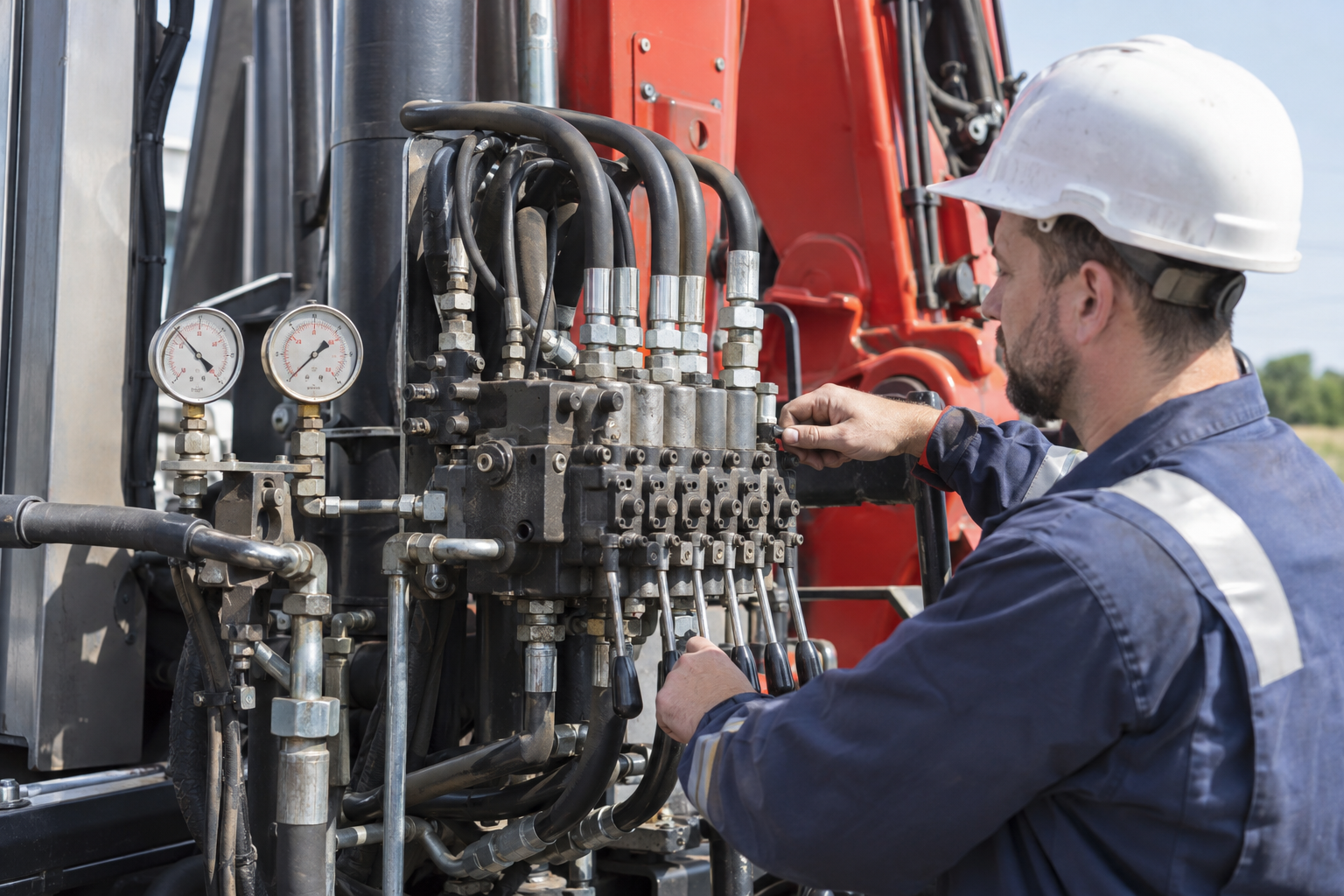
9. Pump Wear and Low Pressure
The hydraulic pump provides oil flow and pressure for the crane. If the pump is worn or damaged, the crane may become weak, slow, noisy, or unable to complete certain movements.
Pump problems can be caused by dirty oil, cavitation, incorrect oil viscosity, insufficient oil level, overheating, excessive load, or long-term wear. A pump should not be replaced blindly without checking the whole system. Low pressure may also come from valve leakage, cylinder leakage, or a blocked filter.
Regular oil maintenance and correct operation are the best ways to extend pump life. Operators should avoid running the crane with low oil level or dirty oil.
10. Abnormal Noise and Vibration
Abnormal noise in the hydraulic system may come from the pump, valve, hose, cylinder, or oil tank. It may sound like knocking, whining, vibration, or air bubbles moving through the system.
Possible causes include air entering the system, low oil level, cavitation, clogged filter, loose pipe clamps, damaged pump, unstable pressure, or oil contamination. Operators should stop and inspect the crane if abnormal noise appears during lifting.
Noise is often an early warning sign. Fixing the cause early can prevent larger failures and reduce repair cost.
11. Remote Control or Electro-Hydraulic Response Problems
Many modern truck mounted cranes can be equipped with wireless remote control. Remote control improves visibility and safety, but it must work together with the hydraulic control system. If the remote control signal, receiver, wiring, solenoid valve, or battery has problems, crane movement may become delayed or unstable.
Common signs include delayed response, no response, intermittent movement, emergency stop failure, or inconsistent speed. The operator should check the remote-control battery, emergency stop button, receiver connection, and valve response before operation.
For buyers who choose wireless remote control, the supplier should test the system before delivery and provide basic operation guidance. Review the crane’s key safety features before commissioning.
Hydraulic Problem Diagnosis Table
| Problem | Possible Causes | What to Check |
|---|---|---|
| Oil leakage | Worn seals, loose fittings, hose damage | Hoses, fittings, cylinders, valve block |
| Weak lifting force | Low pressure, pump wear, internal leakage, overload | Load chart, pump, valves, cylinders, oil level |
| Slow boom movement | Low flow, blocked filter, valve issue, wrong engine speed | Filters, pump flow, PTO speed, valve response |
| Oil overheating | Continuous heavy work, blocked filter, poor cooling | Oil temperature, cooler, filters, oil volume |
| Cylinder drift | Internal leakage, faulty holding valve, worn seals | Cylinder seals, holding valves, control valves |
| Abnormal noise | Air in system, cavitation, low oil, pump problem | Oil level, suction line, filter, pump condition |
| Remote response issue | Low battery, receiver fault, solenoid valve problem | Remote battery, receiver, wiring, solenoid valves |
How to Prevent Hydraulic Problems
Preventive maintenance is the most effective way to reduce hydraulic problems. Many failures can be avoided if the operator follows a daily inspection routine and uses the crane correctly.
- Check hydraulic oil level before operation.
- Inspect hoses, fittings, cylinders, and valve blocks for leakage.
- Replace hydraulic oil and filters according to the maintenance schedule.
- Keep the hydraulic system clean during repair and oil filling.
- Avoid overloading and follow the load chart.
- Use outriggers correctly before lifting.
- Avoid sudden operation under heavy load.
- Check oil temperature during continuous work.
- Replace aged hoses and seals before failure.
- Keep spare hydraulic parts for overseas use.
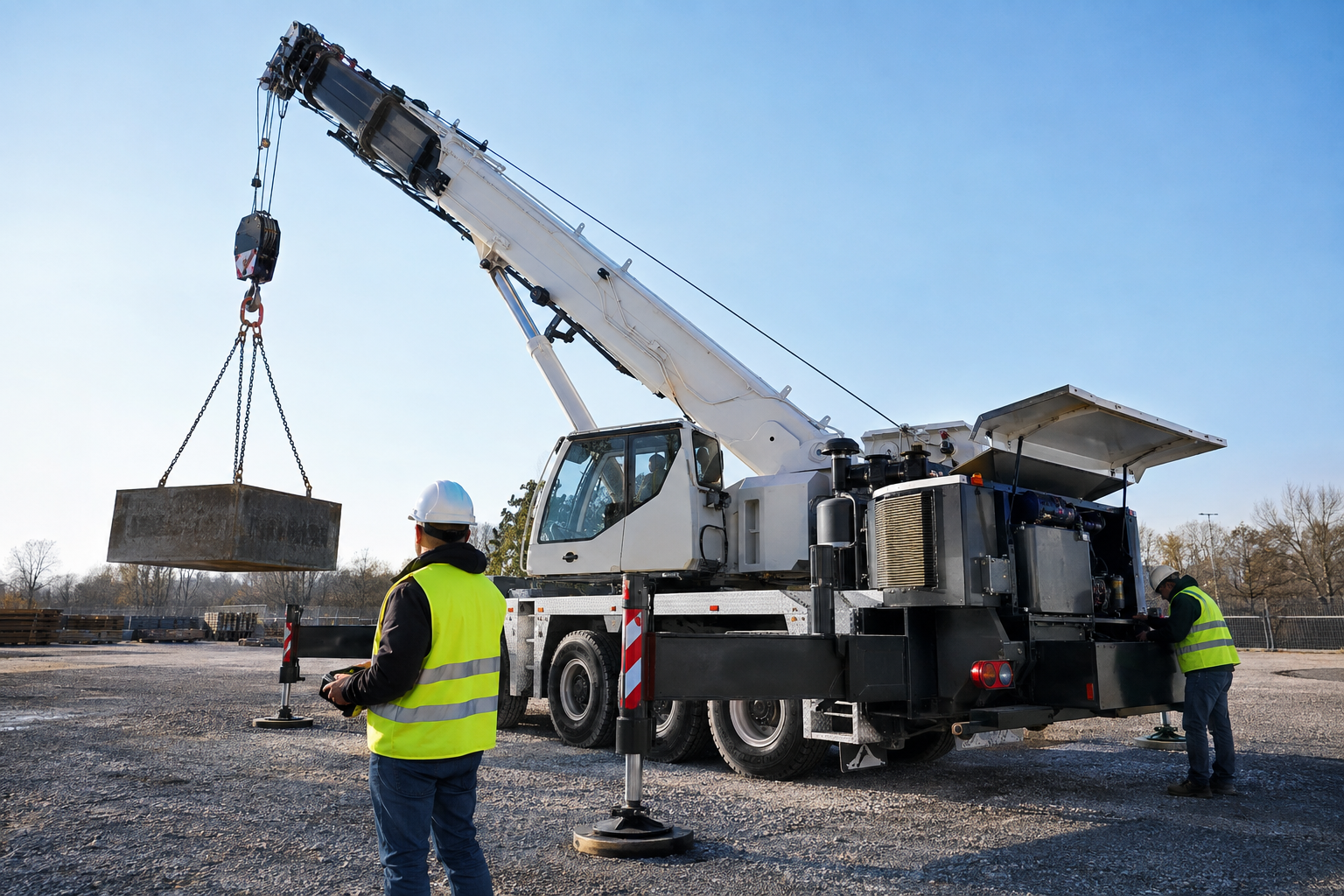
What Buyers Should Ask Before Purchasing
Before purchasing a truck mounted crane, buyers should evaluate the hydraulic system carefully. A lower price may not be a good deal if the hydraulic components are weak, the hose layout is poor, or after-sales support is limited.
- What hydraulic pump and valves are used?
- Is an oil cooler recommended for my working condition?
- Are hydraulic outriggers included?
- Can wireless remote control be added?
- Can you provide hydraulic system testing before delivery?
- What hydraulic oil is recommended?
- What spare seals, hoses, and filters should I prepare?
- Can you provide hydraulic troubleshooting support after delivery?
- Can you identify parts from photos or videos?
- Can you provide operation and maintenance guidance?
How HAOY Helps Reduce Hydraulic Risks
For customized truck mounted cranes, hydraulic reliability should be considered from the beginning of the project. HAOY can discuss crane capacity, boom type, working radius, truck chassis information, hydraulic outriggers, control method, wireless remote control, and application requirements before production.
For buyers who need one crane for one truck chassis or one project, early technical communication helps reduce the risk of hydraulic mismatch. HAOY also supports OEM/ODM truck mounted crane customization and related lifting equipment, with customized orders available from one unit.
Buyers can request operation videos, load testing, hydraulic function testing, and final inspection before shipment. This helps confirm that the hydraulic system works properly before the crane leaves the factory.
FAQ About Hydraulic Problems in Truck Mounted Cranes
What is the most common hydraulic problem in truck mounted cranes?
Oil leakage is one of the most common problems. It often appears around hoses, fittings, cylinders, valves, and seals. Small leakage should be repaired early before it causes pressure loss or larger failure.
Why does my truck mounted crane lift slowly?
Slow lifting may be caused by low hydraulic pressure, blocked filters, worn pump, valve problems, contaminated oil, low engine speed, or overload. The operator should also check whether the load is within the safe load chart range.
Why does the boom slowly drop after operation?
This may be caused by cylinder internal leakage, worn seals, faulty holding valves, or valve leakage. It should be inspected before further use because it may affect safety.
How often should hydraulic oil be replaced?
The replacement interval depends on crane model, working frequency, oil quality, and working environment. Buyers should follow the manufacturer’s maintenance schedule and shorten the interval in dusty, hot, or heavy-duty conditions.
Can contaminated hydraulic oil damage the crane?
Yes. Dirty oil can damage valves, pumps, cylinders, seals, and filters. It can also cause unstable movement, overheating, noise, and weak lifting force.
What spare hydraulic parts should overseas buyers prepare?
Common spare parts include hydraulic hoses, seals, oil filters, fittings, remote control batteries, electrical connectors, and other wear parts recommended by the supplier.
Conclusion
The most common hydraulic problems in truck mounted cranes include oil leakage, weak lifting force, slow boom movement, overheating, cylinder drift, hose aging, contaminated oil, valve failure, pump wear, abnormal noise, and remote-control response problems. These issues can increase maintenance costs, reduce work efficiency, and create safety risks if they are ignored.
Most hydraulic problems can be reduced through correct crane selection, proper chassis matching, clean hydraulic oil, regular inspection, timely replacement of wear parts, operator training, and preventive maintenance. Buyers should not evaluate a truck mounted crane only by rated capacity and price. The hydraulic system, control method, testing process, spare parts support, and supplier’s technical ability are equally important.
Before purchasing, buyers should provide lifting capacity, working radius, truck chassis information, application, operating environment, and control requirements. With this information, the supplier can recommend a more suitable hydraulic configuration and help reduce long-term maintenance risk.