
Introduction
In modern global heavy machinery, municipal road building, and logistics sectors, the truck mounted crane has become a cornerstone asset due to its dual capabilities of heavy transportation and high-altitude lifting. However, evaluating the profitability of such large machinery relies entirely on one metric: fleet uptime. The moment a truck mounted crane is pulled into the workshop for unscheduled repairs, it transforms from a productivity tool into a capital liability draining cash flow.
When upgrading fleet assets, international procurement officers, truck dealers, and OEMs often look closely at major components like structural steel weight, power take-off (PTO) efficiency, or chassis horsepower. Yet, the overall stability, micro-movement precision, and operational lifecycle of the entire boom system frequently rest upon a component costing less than a fraction of the build: the hydraulic seal. In heavy-duty fluid systems, these small elastomeric rings are the primary line of defense against pressure loss, contamination, and sudden downtime.
1. The Harsh Physical Environment of Truck Crane Hydraulics
To appreciate the necessity of premium seals, one must analyze the complex mechanical and environmental conditions that a truck mounted crane for sale must endure during daily job site service.
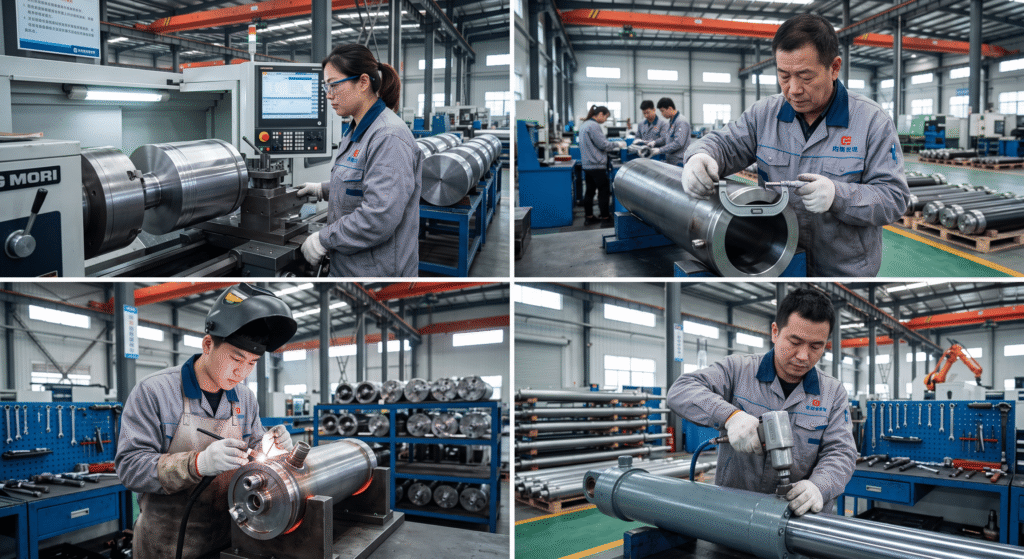
Unlike indoor stationary industrial hydraulic networks operating under predictable cycles, truck-mounted crane fluid loops face highly dynamic environments. The first major stress factor is uneven side loads. When telescopic or knuckle boom cranes extend to their maximum working radius, the physics of structural leverage concentrate immense forces on the cylinder rod. This load asymmetry causes a microscopic bending moment (micro-bending), crushing the seal lip on one side while creating a slight clearance gap on the other.
Furthermore, as operators use proportional valves to rapidly adjust boom elevation or extension, internal hydraulic pressures generate intense pressure spikes, often soaring past 350 Bar. Combined with cold engine startups in winter and high-load heat generation during summer afternoons (with temperature variations exceeding 100°C), standard commercial-grade rubber seals see their polymer structures crack and permanently deform, causing total system failure.
2. The Financial Chain Reaction of Micro-Leaks: Direct and Indirect Costs
In basic fleet management models, micro-leaks—minor fluid weeping along the cylinder rod—are often tolerated as small maintenance quirks. However, in a professional B2B environment, minor leaks trigger costly financial chain reactions.
• Zero-Tolerance Site Environmental Compliance
Modern high-tier construction sites, municipal projects, and harbor ports enforce zero-tolerance environmental protection rules. If an active crane drips hydraulic oil onto the ground or water, environmental officers will instantly halt operations, eject the machine from the site, or issue heavy financial penalties, triggering massive project downtime.
• Systemic Hydraulic Breakdown via Particle Influx
Hydraulic seals operate as a two-way barrier: retaining oil while blocking dust. When low-grade seals wear down and create gaps, high-hardness atmospheric silica dust, cement micro-particles, and salt spray enter the cylinder during rod retraction. These contaminants act as an abrasive grinding paste inside the loop, wearing out proportional valve spools and high-pressure piston pumps, leading to systemic system cavitation and fluid oxidation.
• The High Cost of Maintenance Labor Multipliers
Replacing a cheap seal set carries a negligible material cost, but the replacement process requires dismounting heavy cylinders, draining hydraulic oil, cleaning the rods, rebuilding the packings, and bleeding the system. Choosing cheap seals means using thousands of dollars in lost operating time and mechanical labor bills to offset a minimal procurement saving.
3. Premium Material Science: PU, Viton, and PTFE Upgrades
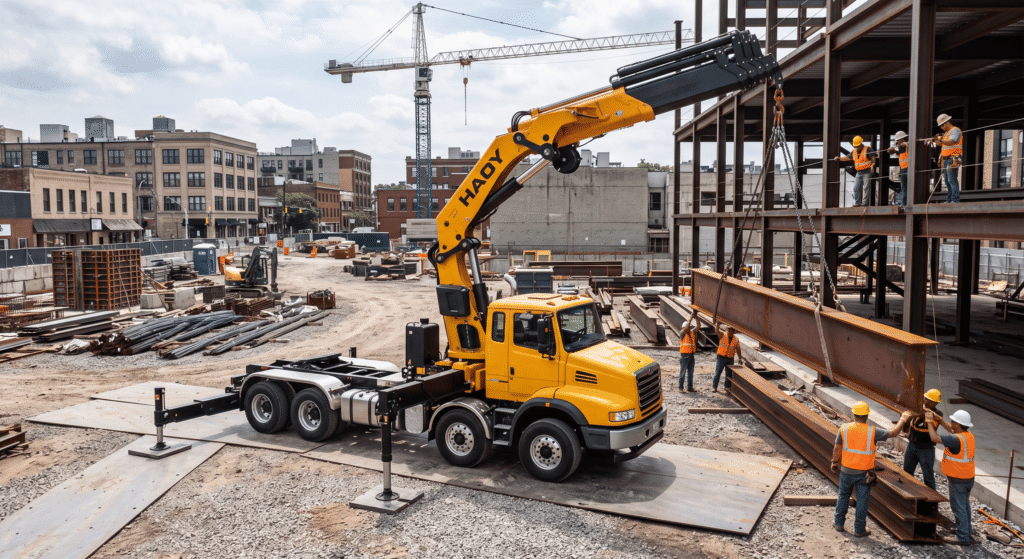
High-quality truck mounted cranes and aerial work platforms avoid generic nitrile rubber (NBR) inside critical cylinders. To withstand high-pressure physical squeezing and tearing, manufacturers deploy advanced polymer science configurations:
• Premium Polyurethane (PU): This material offers exceptional tensile strength and superior wear resistance. Faced with fine industrial dust clinging to the extending cylinder rod, a premium PU lip remains sharp without blunting, keeping an optimal wiping effect over millions of cycles.
• Fluorocarbon (Viton / FKM): For cranes operating in hot climates or running long, uninterrupted infrastructure shifts, Viton is indispensable. It retains chemical stability and elasticity at continuous temperatures exceeding 100°C, preventing the seals from hardening and cracking, which eliminates sudden blowout risks.
• Filled PTFE Wear Rings: To absorb the side-load bending moments described earlier, premium cylinders configure glass-filled or bronze-filled PTFE guide bands on the piston and gland. These bands take the brunt of the lateral mechanical force, keeping the rod centered and shielding the high-pressure seals from uneven distortion.
4. Proactive Maintenance Protocols: Making Downtime Predictable
Sourcing premium seals changes your maintenance protocol from reactive troubleshooting to highly controlled, planned interventions. Because premium polymers degrade gradually, fleet managers can predict the lifespans of critical components.
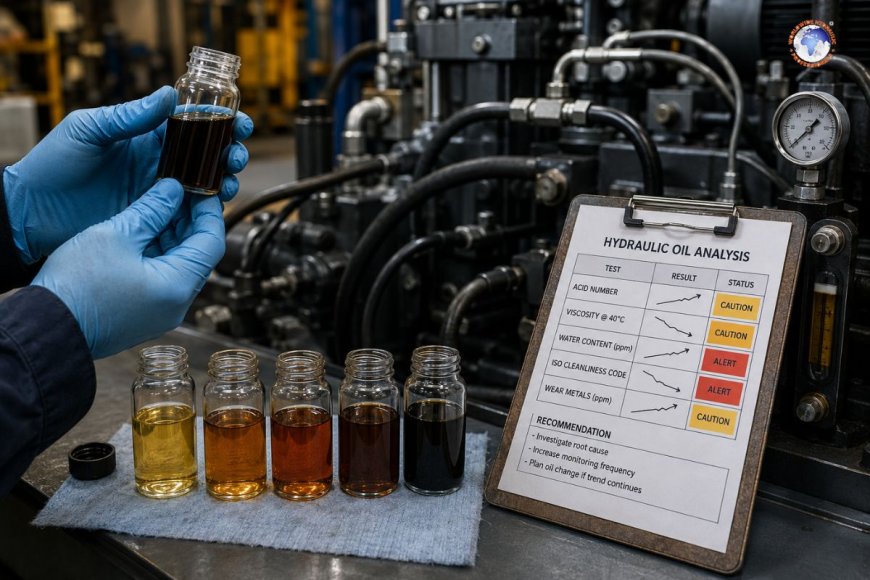
By executing regular cylinder drift tests—suspending the maximum rated capacity at full extension for 15 minutes and monitoring micrometer-level rod settling due to internal fluid bypass—technicians can track wear paths clearly. Because premium seals degrade evenly, fleet managers can predict parts lifespans weeks in advance, scheduling replacements during factory off-seasons or between major project changes, eliminating emergency field breakdowns.
5. Auditing Specifications
If you are a supply chain director, municipal project purchaser, or commercial truck dealer preparing a fleet upgrade, ensure you write the following three engineering benchmarks into your contract frameworks to lock out fluid system risks:
1. Mandate Global Brand-Name Sealing Components: Explicitly require that all critical lifting, luffing, and outrigger cylinders utilize validated sealing systems from global industry leaders (such as Trelleborg, Freudenberg, or Hallite), refusing low-cost generic substitutes.
2. Enforce Double-Lip Wiper Seal Audits: For cranes working in severe deserts, arctic job sites, or coastal zones, ensure all exposed rods use high-strength double-lip wipers. The outer lip clears mud or frost, while the inner lip recovers the oil film, creating complete system isolation.
3. Standardize with ISO International Seal Grooves: Ensure all cylinder designs match international metric standards (such as ISO 5597 or ISO 7425). This ensures that if machines are deployed to remote destinations, local field mechanics can quickly source exact matching parts locally, dropping parts waiting downtime to zero.
Conclusion
Heavy equipment competition looks structural on the surface, but it is ultimately won on fleet availability rates and Total Cost of Ownership (TCO) control. Inside the heavy steel framework of a truck mounted crane, the high-pressure hydraulic system functions as the primary muscle network of every heavy lift.
By prioritizing advanced polyurethane, Viton, and PTFE material configurations at the component level, fleet operators eliminate cascading failures caused by internal leaks, fluid bypass, and abrasive particle pollution. In the final account, investing in premium sealing components ensures that paying a minor quality premium upfront delivers vast dividends in consistent machine uptime, reduced mechanical labor hours, and an unassailable return on your equipment investment.