
How Long Does It Take to Manufacture a Customized Truck Mounted Crane?
A customized truck mounted crane commonly takes several weeks to manufacture after the technical specification and order are confirmed. For early project planning, a crane based on an existing model may fit an illustrative four-to-eight-week production window, while a major engineering redesign can take considerably longer. This is not a universal industry standard or a confirmed delivery promise: actual timing depends on the manufacturer, model, component availability, testing requirements, and factory schedule.
Buyers should distinguish manufacturing lead time from total delivery time. Engineering approval, production, factory acceptance, export packing, ocean freight, customs clearance, and local installation are different milestones. Understanding these steps makes it easier to compare suppliers and plan a project without surprises. For the information needed before a quote, review the truck mounted crane quote checklist.
What Does Manufacturing Lead Time Actually Include?
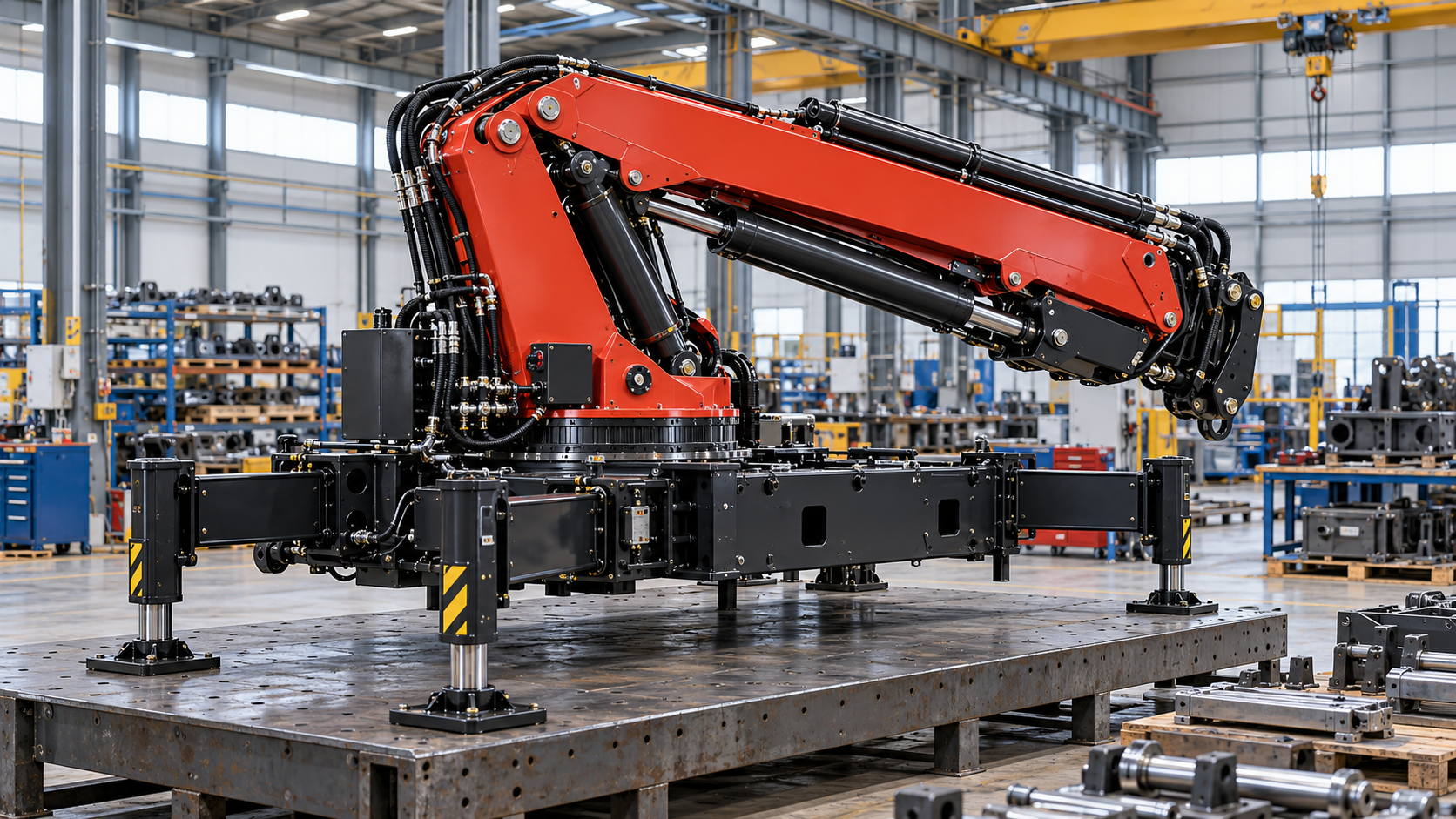
Manufacturing lead time typically begins after the supplier has the information needed to release the order for production. That may mean an approved technical specification, truck chassis drawings, confirmation of optional equipment, and agreed commercial milestones. If the buyer has not confirmed the boom type, mounting arrangement, working radius, or control system, the production clock may not have started.
Some suppliers quote only the workshop production period; others include engineering review, inspection, and packing. Always ask for the start date, the end milestone, and a written breakdown rather than relying on a single number.
Illustrative Production Timelines by Customization Level
The following ranges are examples for planning discussions, not guaranteed market averages. They assume that the design is feasible, major components are obtainable, and no separate certification project is required.
| Order type | Illustrative timeframe | What usually changes |
|---|---|---|
| Existing crane model, minimal changes | About 4-6 weeks | Color, logo, standard controls or accessories |
| Configured OEM or ODM crane on an existing platform | About 6-10 weeks | Boom sections, outriggers, controls and hydraulic layout |
| Substantial engineering customization | 10-16+ weeks or longer | New structural design, prototype work, special components and validation |
A time estimate should always be linked to a specific scope of work. A crane-only shipment may have a different timeline from a fully installed crane truck, particularly when a vehicle chassis must be sourced or modified.
Engineering Review and Chassis Compatibility
The first major variable is how much engineering is needed before fabrication. A buyer asking for a 10-ton crane has not provided enough information for a reliable schedule. The manufacturer must know the required load at a specified radius, lifting height, boom type, installation location, and intended truck chassis.
Wheelbase, frame dimensions, axle ratings, available space, PTO arrangement, and intended outrigger layout affect the mounting design. If chassis information is missing or changes midway through the project, drawing approval and production may be delayed. Where local vehicle approval is required, involve a qualified installer or vehicle engineer early.
Boom Type and Customization Depth
Knuckle boom and telescopic boom cranes can use different structural assemblies, hydraulic circuits, and extension mechanisms. Selecting an existing model with standard options is generally faster than requesting a new reach, revised boom geometry, or a significantly different load chart. The more the lifting structure changes, the more engineering verification and testing may be necessary.
Customization of paint color or nameplates may be relatively straightforward. Changes to safety-critical steelwork, hydraulic controls, lifting capacity, or stability require greater scrutiny. A responsible supplier should explain when a request cannot safely be handled as a minor modification.
Component Procurement and Supplier Availability
Hydraulic cylinders, pumps, valves, slewing components, steel plate, wireless remote controls, and special accessories must be available at the right time. Standard components already used across a product range may be easier to source. A buyer-specified imported valve, particular remote-control brand, or uncommon fitting may extend procurement.
Ask which components are in stock, which are made to order, and whether proposed alternatives are technically equivalent. Do not approve an unspecified substitution on a safety-critical component merely to meet a shipment date.
Fabrication, Assembly, and Surface Finishing
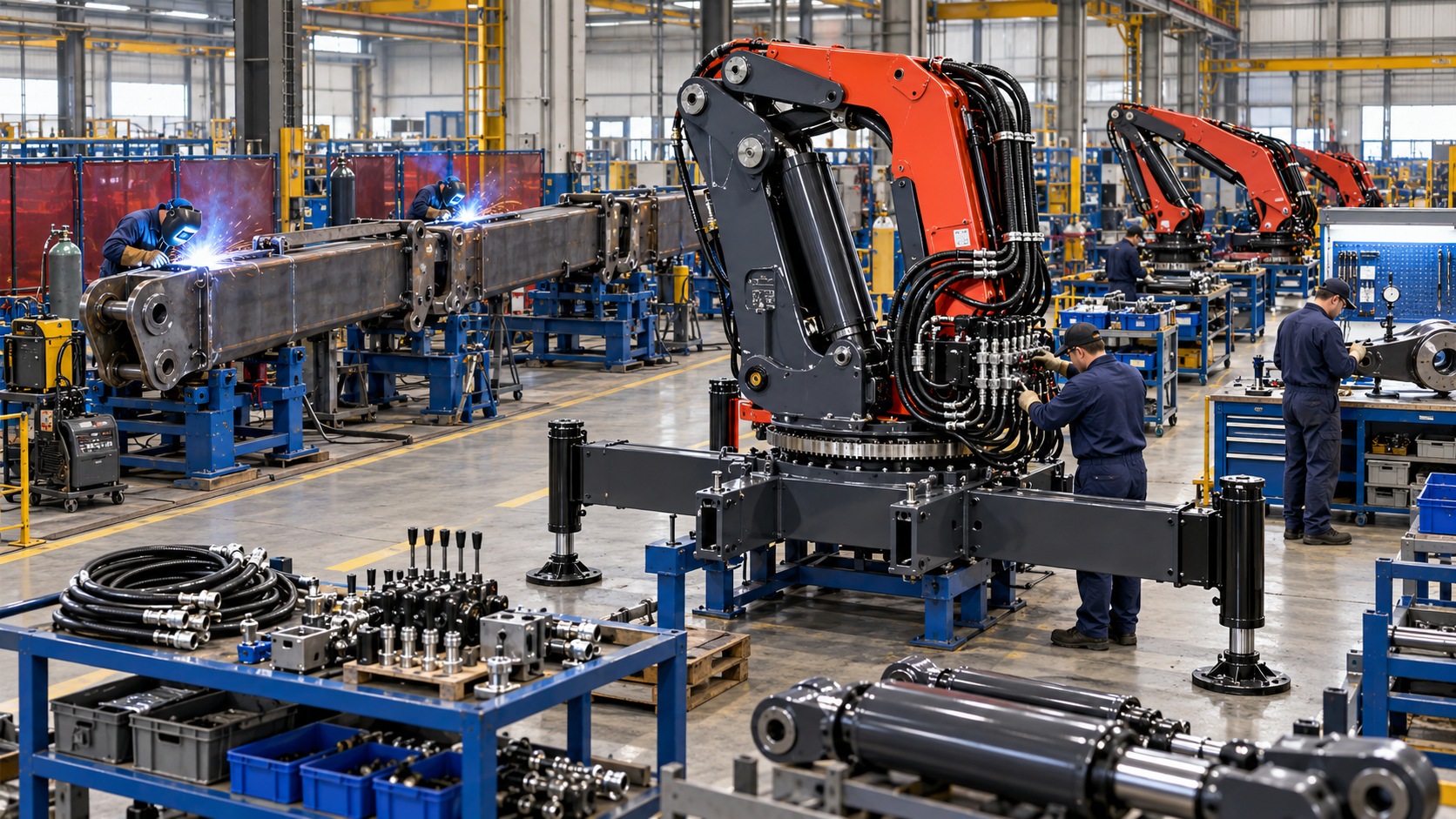
Once drawings and materials are ready, fabrication can include steel cutting, machining, welding, dimensional checks, and preparation of the boom, base, and outrigger structure. The crane then moves through hydraulic assembly, hose routing, electrical installation, control configuration, and mechanical adjustment.
Surface preparation and coating also require time. A standard finish may be simpler to schedule than a specific paint system for marine or highly corrosive environments. The key is to allow adequate processing and curing rather than rushing work to meet an arbitrary date.
Functional Testing and Pre-Shipment Inspection
Factory inspection should be a scheduled milestone, not an afterthought. Depending on the product and agreed test plan, checks may cover boom movement, slewing, outrigger operation, hydraulic leaks, control response, safety functions, and lifting performance. Any required load testing should follow the applicable procedure and the approved crane configuration.
Buyers can request dated photographs, video evidence, serial or model identification, inspection records, and a clear list of open issues. A factory test does not replace checks after final installation on the truck or any local commissioning inspection. See also what buyers should check in a crane load test.
Packing and Export Preparation
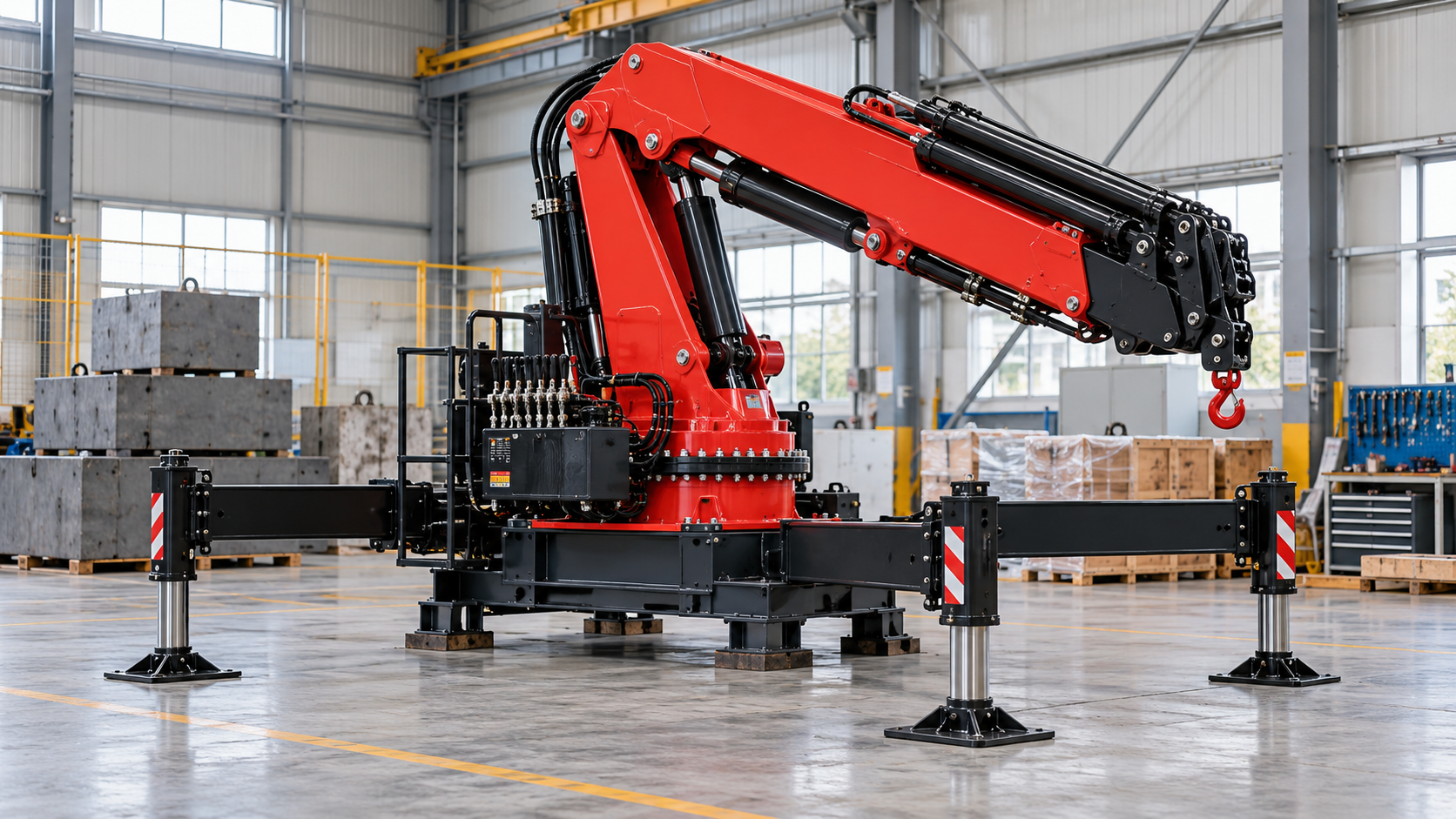
A crane-only unit may be packed differently from a crane installed on a completed vehicle. Overall dimensions, lifting points, securing arrangements, exposed hoses, loose accessories, and the planned freight method affect the packing schedule. A container shipment, flat-rack shipment, or Ro-Ro movement can have different booking and handling requirements.
Manufacturing completion is therefore not the same as cargo departure. Confirm when the machine will be ready for pickup and when the freight forwarder expects shipment. Port schedules and customs processing should be estimated separately. For the export stage, review how a truck mounted crane is shipped overseas.
Typical Project Stages What Buyers Should Confirm
| Milestone | Key output to request |
|---|---|
| Technical approval | Approved configuration, chassis requirements and working-radius targets |
| Production release | Written production start date and completion window |
| Parts readiness | Status of long-lead hydraulic, electrical and control components |
| Assembly completion | Finished-machine photos and configuration confirmation |
| Factory acceptance | Inspection record, test evidence and correction of open issues |
| Export readiness | Packing dimensions, packing list, pickup date and shipping plan |
How Can Buyers Avoid Unnecessary Production Delays?
The most effective approach is to remove uncertainty before placing an order. Submit the real load and radius requirements, select the required control and outrigger options, and provide chassis drawings or measurements. Confirm what counts as an approved design and designate one person to sign off drawings and changes.
Ask the supplier for a milestone-based schedule instead of a simple ready in 30 days statement. If a change is requested after drawings have been approved, ask how it affects parts, testing, cost, and lead time. Written change control is particularly valuable for OEM and ODM projects.
For an urgent project, discuss a suitable standard model rather than pushing for unverified structural changes. A technically appropriate standard configuration can be a better choice than a rushed custom design.
What Should Buyers Ask Before Confirming Lead Time?
- When does the quoted production period officially begin?
- Does the estimate include engineering approval, factory testing, and export packing?
- Which parts are long-lead items, and are they already available?
- Does the schedule cover crane-only supply or installation on a truck?
- What happens if we change the boom, controls, or mounting position?
- What inspection evidence will we receive before shipment?
- Can you provide a written milestone schedule and updates if it changes?
How HAOY Approaches Customized Crane Orders
HAOY (Xuzhou Haoyi Engineering Machinery Technology Co., Ltd.) offers OEM and ODM customization across truck mounted cranes, marine cranes, and vehicle-mounted aerial work equipment. The company accepts customized equipment orders starting from one unit, which can suit a contractor purchasing for one project or a dealer evaluating a sample.
For an accurate HAOY production schedule, buyers should submit the required lifting capacity, working radius, intended chassis, boom preference, control features, installation position, destination market, and special documentation needs. Request a project-specific lead-time confirmation after the technical scope is agreed; a one-unit MOQ does not itself determine how quickly a crane can be built.
FAQ Customized Truck Mounted Crane Production Time
How long does a customized truck mounted crane take to manufacture?
Production often takes several weeks. As an illustrative starting point, a configured crane based on an existing model may take roughly four to eight weeks, while significant engineering changes may take longer. Ask the chosen manufacturer for a written schedule.
Does a one-unit OEM order take longer than a batch order?
Not necessarily. A single unit may be easier to schedule, but special parts and engineering work can offset that advantage. Batch production can also reduce setup time per unit once the first design is approved.
When does the manufacturing lead time start?
That depends on the supplier contract. It commonly starts after technical approval and production release, not from the first inquiry. Confirm the start milestone in writing.
Is overseas shipping included in the production time?
Usually not unless the supplier explicitly says so. Packing, vessel booking, transit, customs clearance, local installation, and commissioning should be shown as separate schedule stages.
Can a supplier speed up a customized crane order?
Sometimes, if a suitable existing model and required components are available. Buyers should not shorten safety-critical engineering, inspection, or test steps simply to meet an earlier shipment date.
What information helps the manufacturer give a more accurate estimate?
Provide the truck model, frame and wheelbase data, load at required radius, lifting height, boom type, mounting location, control options, destination country, and required compliance documents.
Conclusion
The manufacturing time for a customized truck mounted crane depends on far more than the number of units ordered. Engineering scope, chassis matching, component availability, boom configuration, assembly, testing, and packing all influence the completion date. The safest way to manage lead time is to agree on technical requirements early and request a written schedule with visible milestones.
For a meaningful estimate, send the manufacturer your truck and lifting requirements before discussing a fixed delivery date. That gives both sides a realistic basis for production planning and helps prevent a rushed crane from becoming an expensive installation or maintenance problem later.